
Welcome to the Monday edition of the Crypto In America newsletter!
What you’ll read: Coinbase and the banks are now the main characters in the drama over passing crypto market structure legislation, President Trump threatens to sue JPMorgan over alleged debanking, and what we’re watching this week.
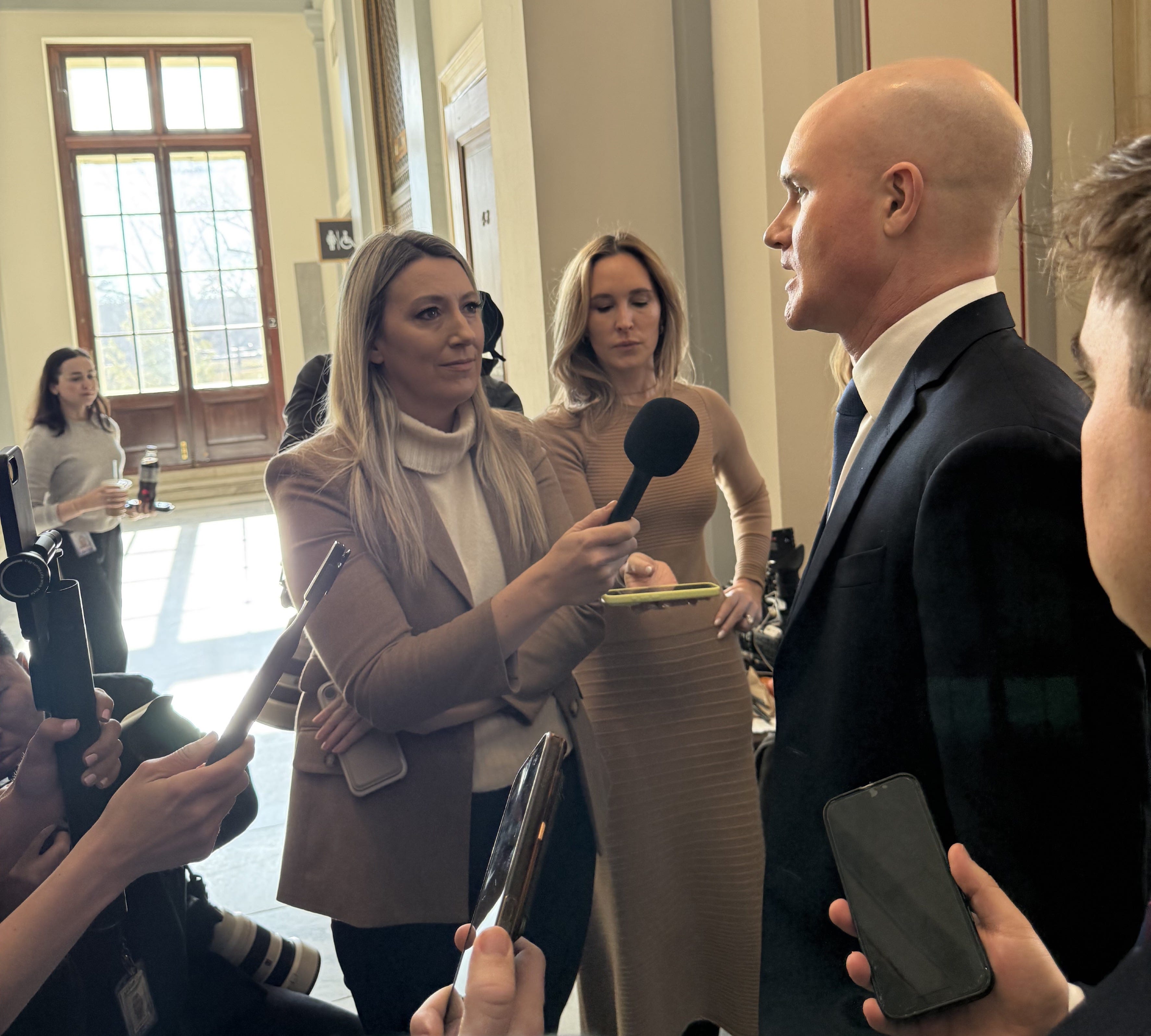
The ball is now in Coinbase’s court. That’s what sources at both the White House and the Senate Banking Committee tell Crypto In America after the crypto exchange withdrew its support for the Committee’s crypto market structure bill, prompting a pause in last week’s scheduled markup.
Quick recap: Last Wednesday evening, the Banking Committee pulled a highly anticipated vote on its market structure bill, originally scheduled for the following morning. The move came after Coinbase CEO Brian Armstrong posted on X that he could not support the bill in its current form, citing “too many issues,” from killing stablecoin rewards to consumer privacy concerns and giving too much deference to banks.
While Coinbase says it has support from industry peers, several other companies issued statements in the hours following Armstrong’s comments, with some backing the bill and others urging the markup to move forward. Negotiators on the Banking Committee and at the White House now see it as Coinbase’s problem to solve and are stepping back until it does.
As Crypto In America reported Friday, following a phone call with a source close to the White House, officials are “furious” that Coinbase withdrew its support without notifying them, especially since the exchange had been in closed-door talks just moments before Armstrong’s post. The source, speaking on condition of anonymity, said the White House is considering pulling support for the market structure bill if Coinbase does not return “really fast” with a yield agreement that “satisfies the banks” and “gets everyone to a deal,” which the source said was crucial to getting the bill through committee.
In response, Coinbase CEO Brian Armstrong said Crypto In America’s reporting was “not accurate,” though he didn’t specify what was wrong. He added that the White House had been “super constructive” and that the exchange has been “cooking up some good ideas” to specifically help community banks, but offered no further details.
The tug of war between crypto and banks over stablecoin yield has been a major drag on market structure negotiations. Many argue it was largely settled under the recently passed GENIUS Act, but the banking industry is now relitigating it, fearing that higher stablecoin yields could trigger a mass exodus from traditional bank accounts.
For some senators, including Angela Alsobrooks (D‑MD) and Thom Tillis (R‑NC), support for the bill hinges on addressing banks’ yield concerns by limiting consumers’ ability to earn interest on stablecoins — a move that could affect Coinbase’s business more so than other industry stakeholders. Further yield amendments to the Banking Committee’s bill, filed by Alsobrooks and Tillis ahead of the markup, reportedly rattled Coinbase and other industry players, contributing to the exchange getting cold feet.
But whether banks will be willing to negotiate in good faith remains to be seen. According to Matthew Wholey, founder of D.C. lobbying firm PolicyPartner, the banks are reportedly having a “good laugh over Coinbase’s own goal.” Wholey added, “Bankers fully intend to try to kill the bill for their own reasons and didn’t expect the crypto industry to implode upon its own signature piece of legislation.”

But Coinbase remains optimistic.
“Bankers have had a big voice in Washington, but the 52 million Americans who own crypto are now a force to be reckoned with,” Coinbase Chief Policy Officer Faryar Shirzad told Crypto In America.
Meanwhile, the Senate is out of session this week for the MLK Day holiday, and Banking Committee staffers are set to begin regrouping as questions linger over whether the markup could be rescheduled for the week of January 26, the same week the Senate Agriculture Committee is set to hold its own rescheduled markup.
One staffer told Crypto In America that the timeline for rescheduling remains uncertain and hinges on several factors, chiefly the outcome of industry negotiations on stablecoin yield and a deal between Senate Democrats and the White House on ethics.
Banking Committee leadership appears to want clarity on deal specifics before restarting the process.
"It’s going to take a while to develop a plan on how to make another run at it. I’m not going to reach out to do it immediately. People need a chance to soak in what happened,” Senator Cynthia Lummis (R-WY), one of the bill’s lead Republican negotiators, told Politico.
Of course, it’s not just Coinbase raising objections to the bill. Since the markup was paused, other corners of the industry have voiced concerns, including on new DeFi provisions that could force centralized compliance on purportedly decentralized platforms, and expanded SEC authority over network tokens. Some have warned that Section 505 of the text could act as a “de facto ban” on tokenized equities, though many in the industry now believe it may not be a major issue.
Senate Judiciary leaders Chuck Grassley (R‑IA) and Dick Durbin (D‑IL) have also weighed in, warning that the Blockchain Regulatory Certainty Act (Section 604 of the bill) could inhibit law enforcement’s ability to prosecute money laundering and other financial crimes, and arguing it should fall under the jurisdiction of the Senate Judiciary Committee rather than Banking — a point the Banking Committee disputes. The Senate Parliamentarian ruled last week that the Blockchain Regulatory Certainty Act, aimed at protecting software developers’ ability to write code and the right to self-custody digital assets, falls within the Banking Committee’s jurisdiction.
Trump Escalates Debanking Fight With JPMorgan
President Trump took to Truth Social over the weekend, threatening to sue JPMorgan for allegedly debanking him following the January 6, 2021 U.S. Capitol riot.
The post followed a Wall Street Journal article claiming Trump had offered JPMorgan CEO Jamie Dimon the role of Fed chair, which the president refuted.
“This statement is totally untrue. There was never such an offer and, in fact, I’ll be suing JPMorgan Chase over the next two weeks for incorrectly and inappropriately DEBANKING me after the January 6th Protest…,” Trump said.
JPMorgan pushed back on the allegation.
“While we won’t get specific about a client, we don’t close accounts because of political beliefs,” JPMorgan Chase spokesperson Trish Wexler said.
In August, Trump signed an executive order aimed at curbing debanking, directing banks not to deny financial services based on a customer’s political or religious views. Under the previous administration, many individuals and businesses in the crypto industry were also swept up in debanking, prompting congressional hearings on the issue and helping spur Trump’s executive order.
Some, including Strike CEO Jack Mallers, say they continue to be targeted by banks like JPMorgan for crypto-related activity.

The financial rails of the future are being built on Avalanche. Just ask Citi, JP Morgan, Blackrock or Dinari.
Find out how Avalanche is accelerating global finance.
👀 What To Watch This Week

Monday
Martin Luther King Jr. Day
Thursday
8:30 am: The Commerce Department releases its first revision of Q3 GDP
10:00 am: Commerce releases November PCE index, tracking inflation
10:00 am: The FDIC Board hosts an open meeting to discuss amendments to its guidelines on material supervisory determinations.
Friday
10:00 am: Final University of Michigan survey offers a snapshot of consumer sentiment
Remember, new editions of the Crypto In America newsletter drop every Monday and Wednesday.
If you like what you’re reading, don’t forget to subscribe!
Your "source" at the White House doesn't sound anything like President Trump or his agenda. Why would President Trump be upset with Brian Armstrong when Armstrong is simply calling out the big banks? President Trump responded by saying he is going to be suing JP Morgan. My question is who is paying YOU and whose side are YOU really on? Your voice sounds like the lobbyists for big banks, Elizabeth Warren, and RINOs.