
Welcome to a special Sunday edition of the Crypto In America newsletter!
What you’ll read: The first TSV goes live as more companies object to OKXICE’s plans to tokenize their shares. Crypto’s biggest super PAC celebrates 86 election wins, but some costly defeats could come back to haunt the industry. Plus, the biggest headlines from last week.
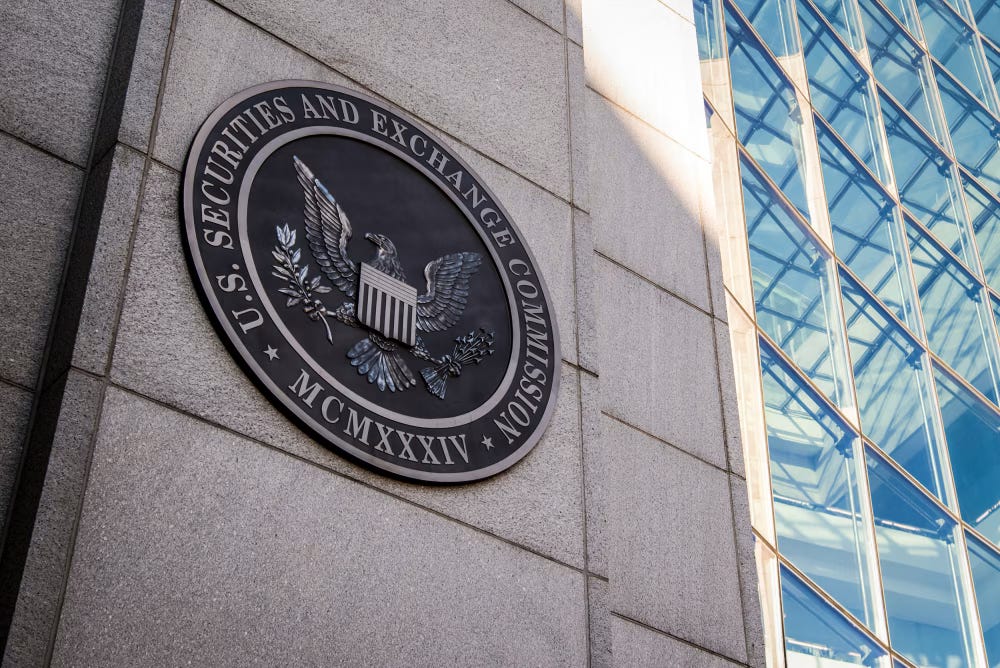
The first tokenized stock trading venue to operate under the SEC’s Innovation Exemption executed its first trades this week, marking a notable milestone in the Commission’s push to bring Wall Street onchain.
On Wednesday, TSV LLC facilitated trades in issuer-sponsored tokenized shares of Canton Strategic Holdings CNTN 0.00%↑. The trades were executed through a permissioned pool on Tradecraft, the automated market maker protocol powering TSV LLC, and settled atomically on the Canton Network. Fairmint, the company’s SEC-registered transfer agent, recorded the shares in token form and maintained the onchain ownership record. Existing shareholder Five North sold the shares, DRW Cumberland bought them and Flowdesk provided liquidity.
Put plainly: A tokenized version of a U.S.-listed stock traded and settled successfully onchain under SEC oversight.
But one crypto-linked stock does not an onchain equities market make. Expanding tokenization across the broader U.S. equities market will require scale, and convincing corporate America to let third parties tokenize its shares has been an uphill battle so far.
Look no further than OKXICE, the joint venture between OKX and NYSE parent Intercontinental Exchange. Sixty-seven issuers, including all of the “Magnificent Seven” and corporate giants such as Walmart, JPMorgan, Coca-Cola, Eli Lilly, Boeing and McDonald’s, have formally objected to having their shares tokenized on the venue.
Of the 62 companies in OKXICE’s original proposal, only six have not objected. All are crypto-related: Strategy, Robinhood, Coinbase, Circle, Securitize and BitGo. That means 56 companies from the original lineup have objected, along with 11 issuers that were not initially included.
The wave of objections comes as Wall Street is starting to embrace tokenization, but on its own terms. Under TSV LLC’s issuer-sponsored model, shares are tokenized by a transfer agent with the company’s authorization. OKXICE, by contrast, relies on an unaffiliated third party to do the tokenizing.
The few companies that have explained their objections suggest that model is at least part of the concern. Applied Optoelectronics warned that investors could be confused about its involvement in an offering it “did not sponsor or endorse.” JPMorgan said it remains encouraged by tokenization but wants to be thoughtful about how its shares are represented and traded. The bank opted out of OKXICE “at this stage,” leaving the door open to other approaches.
Most of the 67 objectors have not publicly explained their decisions, so it is too soon to say the third-party model is the only sticking point. NYSE rival Nasdaq has publicly pushed back on the TSV framework, opting instead to pursue an issuer-centric model outside the Innovation Exemption that would bring tokenized shares into the existing regulated equities market.
Crypto In America has learned that another venue preparing to launch under the exemption plans to require issuer consent before tokenizing company shares, rather than rely on the objection process used by OKXICE.
That suggests securing the okay from issuers in advance could become the preferred approach as more venues come to market.
Fairshake Won 86 Races. But Some of Its Biggest Bets Didn’t Pay Off.
Crypto’s biggest political spending machine is touting its record from its midterm spending spree, but some of its biggest bets failed to pay off and could cost the industry in the long run.
According to figures provided to Crypto In America by a Fairshake spokesman, the super PAC and its affiliates, Protect Progress and Defend American Jobs, spent $154.5 million in independent expenditures across 93 races, backing winning candidates in 86 and losing just seven — a roughly 92% success rate.
The group went 53–4 in the primaries, including a 28–0 record in Republican races, and 33–3 in the general election. Its most notable wins included Republican Senator Pete Ricketts of Nebraska, who benefited from more than $13 million in independent expenditures by the Fairshake network, and Rep. Andy Barr, who won the Kentucky Senate seat being vacated by retiring Senator Mitch McConnell. Both were veteran lawmakers whose victories were widely expected, although Ricketts faced a tougher-than-anticipated race.
But some of the group’s losses came with hefty price tags.
In Ohio, Fairshake’s Republican affiliate Defend American Jobs spent approximately $56.6 million supporting Senator Jon Husted and opposing longtime crypto critic Sherrod Brown — more than a third of Fairshake’s reported election spending. Brown defeated Husted and will return to the Senate just two years after the group spent more than $40 million helping elect Republican Senator Bernie Moreno over Brown in 2024.
How Brown will approach the crypto industry when he returns to Washington next month remains to be seen. But he could soon have significant influence over its legislative future, potentially taking the gavel at the Senate Agriculture Committee, which oversees the CFTC and plays a key role in crypto market structure legislation.
The industry also saw two key House allies backed by Fairshake lose their reelection bids, Bryan Steil of Wisconsin, who chaired the House Financial Services digital assets subcommittee, and Bill Huizenga of Michigan, the committee’s vice chair. In Illinois, the group spent approximately $10 million trying to defeat Democrat Juliana Stratton in the Senate primary. She went on to win the general election and will replace retiring Senator Dick Durbin.
Fairshake’s spending strategy this cycle has drawn criticism from Democrats and industry participants alike over its heavy spending against Brown while offering little support to other Senate Democrats.
Senator Ruben Gallego (D-AZ), who benefited from roughly $10 million in spending by Fairshake’s Democratic affiliate in 2024, previously called the decision to target Brown “dumb politics.” This week, he had another warning for the industry, saying crypto groups “better go talk to Sherrod Brown first” before trying to pass another crypto bill.
Fairshake, meanwhile, is standing by its spending strategy and already looking ahead to 2028.
“Newly elected and current members will have a choice: protect consumers and American jobs or fight progress,” a spokesman said in a statement. “We will be watching and ‘28 is a new map.”
From Lisbon: Crypto’s Next Phase
This week on the Crypto In America podcast, we aired our live conversation with Stellar Development Foundation CEO and Executive Director Denelle Dixon and former CFTC Chairman Rostin Behnam from Stellar’s Meridian Conference in Lisbon.
We dug into why the Clarity Act failed, whether crypto legislation became too big and too political, what the midterms mean for the industry’s future in Washington, and how far regulators can go without Congress. Plus, why both believe the industry needs to move beyond politics and speculation and get back to building.
Catch the full episode on all platforms here.
News Flash

Democrats Sweep Congress, Crypto Faces Political Reset: Democrats won control of both chambers, leaving the industry facing a tough road ahead on legislation after losing several key Republican allies.
House Democrats Eye New Crypto Market Structure Bill: Crypto In America scooped that Democrats on the House Financial Services Committee are discussing a potential SEC-focused proposal that would revive provisions rejected in the Clarity Act.
Waters Faces Challenge for House Financial Services Gavel: Rep. Sean Casten is challenging Maxine Waters for the committee chairmanship as Democrats prepare to take control in January. Waters has also pledged to pursue legislation targeting Trump’s crypto conflicts of interest and establish “tough but fair” rules for legitimate crypto businesses.
Cboe, Citadel-Backed Group Sues CFTC Over Stock Perps: The Capital Markets Alliance sued the agency over its approval of single-stock perpetual futures, arguing the contracts fall under SEC jurisdiction. A federal judge said the CFTC likely exceeded its statutory authority but declined to block trading, citing a lack of demonstrated imminent harm.
Blumenthal Puts Crypto Firms on Notice: Senator Richard Blumenthal (D-CT), incoming Senate investigations chair, warned Binance, Tether and World Liberty Financial they could face further committee action if they fail to turn over requested information by January 4.
Treasury Moves to Cut Off MEXC Over Illicit Crypto Flows: FinCEN targeted the Seychelles-based crypto exchange over at least $16 billion in alleged illicit transactions linked to Iranian, North Korean and Russian sanctions evasion and cybercrime.
FinCEN Withdraws Proposed Crypto “Travel Rule” Expansion: Treasury and the Federal Reserve scrapped a proposal to expand recordkeeping requirements for digital asset transactions and lower thresholds for certain cross-border transfers.
Binance Hack Triggers Billions in Outflows, U.S. Bank Scrutiny: The exchange recorded $5.3 billion in net outflows following a record $6.3 billion hack, while the Fed and OCC contacted U.S. banks to assess potential cybersecurity vulnerabilities.
Hyperliquid-Linked Firm Seeks U.S. Regulatory Approval: Hyperliquid Strategies is seeking registration as a futures commission merchant, potentially paving the way for regulated U.S. access to perpetual futures.