
Welcome to the Wednesday edition of the Crypto In America newsletter!
What you’ll read: Bitcoin gets its first muni-style credit rating; the public release of a stablecoin yield compromise is delayed; an Alaska Senate candidate’s fundraiser raises eyebrows in crypto circles; and LayerZero’s co-founder joins the podcast. Plus, the headlines shaping this week.
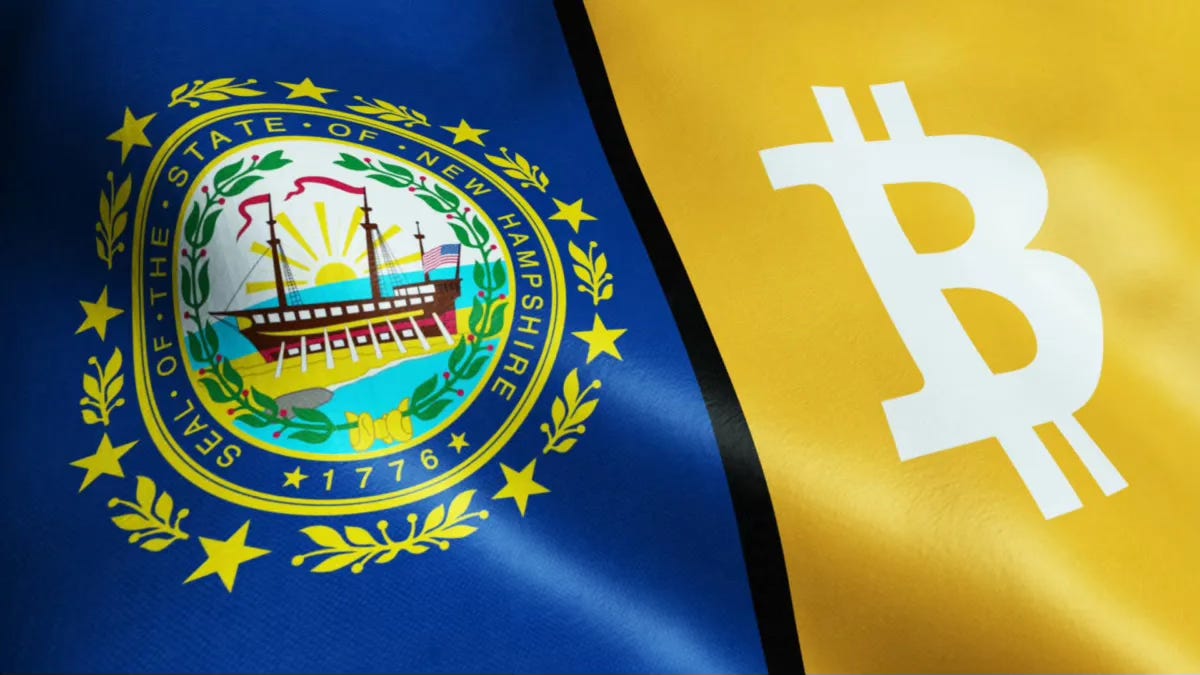
Moody’s has officially put a stamp on New Hampshire’s Bitcoin-backed bond, assigning a provisional Ba2 rating to the $100 million issuance first reported by Crypto In America in November.
This marks the first time a municipal-style bond backed by Bitcoin has been evaluated using traditional credit frameworks. The rating is especially timely, giving institutional investors a way to assess and potentially allocate to crypto-linked fixed income as regulation around blockchain-based instruments grows clearer.
The bond is structured through New Hampshire’s Business Finance Authority as a conduit with no taxpayer backing. Investors are instead protected by overcollateralized Bitcoin held in custody by BitGo; repayments are tied to the liquidation of that collateral if needed.
The structure will look familiar to fixed-income investors: the borrower posts roughly 160% in Bitcoin, with triggers that force liquidation if collateral levels fall. The difference is the asset. Traditional bonds are typically backed by predictable cash flows or government taxing power, whereas this structure relies on the value of Bitcoin held as collateral.
Moody’s based its Ba2 rating on risks tied to the collateral, structure and operations, particularly Bitcoin’s volatility. The rating places the bonds in speculative-grade territory, making them suitable for risk-tolerant investors, but generally outside the scope of more conservative portfolios.
Still, the bigger picture is that Bitcoin has entered the credit ratings system, potentially paving the way for a larger role in the $140 trillion global bond market.
The development follows another notable step for crypto in traditional finance this week, as the U.S. Labor Department issued a proposal to allow alternative assets like cryptocurrency and private equity in retirement accounts.
Stablecoin Yield Text No Longer Expected This Week
The broader crypto industry will have to wait a bit longer to see the final version of a compromise between industry stakeholders and the Senate Banking Committee over stablecoin yield and rewards.
In a shift from last week’s guidance, a spokesperson for Senator Thom Tillis’s (R-NC) office told Crypto In America on Wednesday that the text is no longer expected to be released publicly this week. A source familiar with the matter said the delay reflects concerns that releasing the text ahead of a markup, now expected in the back half of the month, could give opponents an opening to slow the bill’s progress.
The update comes as talks have continued in recent days between crypto and banking groups, following dissatisfaction with an earlier draft agreed to by Tillis, Senator Angela Alsobrooks (D-MD), and the White House.
Crypto Campaign Watch
With seven months to go until the midterms, the crypto industry is making another coordinated push to influence election outcomes after a major showing in 2024. Crypto In America will track the candidates, spending, key races, and the stories shaping the 2026 midterm elections.
Today, Fellowship PAC, a pro-crypto super PAC that launched last year, named Tether’s VP of Regulatory Affairs, Jesse Spiro, as chairman, as the body ramps up efforts to back pro-industry candidates ahead of the midterms. The group says it will begin rolling out its first slate of candidate endorsements in the coming days.
On Monday, members of the Digital Chamber launched a new hybrid PAC, the Blockchain Leadership Fund. The group will both donate directly to pro-crypto candidates, and spend independently on advertising to support or oppose campaigns based on their alignment with industry priorities.
That alignment is something backers of the $2.4 trillion crypto industry are taking seriously.
One Democratic Senate candidate in Alaska is drawing criticism from some industry watchers for associating with a sitting House member who is widely viewed by the industry as anti-crypto.

Mary Peltola, a former U.S. House member from Alaska who is running against incumbent Republican Senator Dan Sullivan, attended a fundraiser hosted on her behalf by Sean Gard, Chief of Staff to Rep. Gwen Moore (D-WI), sources familiar with the event tell Crypto In America.
Moore, who had voted against a handful of pro-crypto legislation, including the GENIUS Act and the Clarity Act, has an ‘F’ rating on Stand With Crypto’s politician scorecard, which tracks members of Congress’ voting records and prior statements on crypto.
“Peltola has an ‘A’ rating on Stand With Crypto, so it’s notable that she would align herself politically and financially with those outside that camp,” said one industry source who requested anonymity.
Sullivan also has an ‘A’ rating on the website.
Alaska is not traditionally a battleground state, but the Senate race is emerging as a potential sleeper contest in 2026, with early polling pointing to a tighter matchup between Sullivan and Peltola. No crypto-linked PAC spending has been reported so far, but groups like Fairshake are sitting on nearly $200 million, so the race could become a target as the election draws closer.

Invest as you spend with the Gemini Credit Card®. Earn up to 4% crypto back on every purchase with no annual fee.
Gemini-branded credit products are issued by WebBank. This is not investment advice and trading crypto involves risk. See Rates & Fees.
LayerZero CEO Bryan Pellegrino on Interoperability and Bringing TradFi Onchain
This week on the podcast, we sat down with Bryan Pellegrino, co-founder and CEO of LayerZero Labs.
Bryan spoke about how the 2011 U.S. online poker ban led him to crypto, his early days in sports betting, and what he learned about the risks of insecure and centralized cross-chain bridges.
We also dove into how interoperability is evolving, LayerZero’s recent growth and institutional partnerships, and what it takes to connect traditional finance to public blockchains.
Plus, Bryan broke down how policymakers in Washington are approaching cross-chain infrastructure, and what the Clarity Act could mean for bringing regulated capital markets onchain.
Watch this episode on all platforms here.
Midweek Recap

ICYMI: Here are some of the biggest stories making headlines this week.
Franklin Templeton launched Franklin Crypto, a new institutional-grade crypto investment unit, and said it plans to acquire a CoinFund spinoff as it looks to expand deeper into digital assets.
Bitcoin logged its worst first quarter since 2018, declining 22% in Q1 2026.
Gold posted its worst monthly decline since October 2008, down 15% in March.
The U.S. DOJ charged 10 foreign nationals across four crypto firms for alleged pump-and-dump schemes in crypto markets. Three executives, including two CEOs, were arrested and extradited from Singapore to face trial.
Two crypto bills cleared Arizona’s House Rules Committee, putting them on a fast track to a full House vote. SB1042 would allow state funds to invest up to 10% in crypto, while SB1649 would create a digital assets reserve fund.
The U.S. Labor Department proposed a rule that would make it easier for 401(k) plans to include alternative assets like crypto, real estate and private equity.
President Trump’s net worth hit an estimated $6.5 billion as of March 2026, driven by crypto gains, licensing deals, and real estate, according to Forbes.
Senators Bill Cassidy (R-LA) and Cynthia Lummis (R-WY) introduced the “Mined in America Act,” aimed at boosting U.S. crypto mining, reducing reliance on foreign hardware, and codifying a Strategic Bitcoin Reserve.
Binance is set to launch oil and gas futures on April 1, offering up to 100x leverage.
Remember, new editions of the Crypto In America newsletter drop every Monday and Wednesday.
If you like what you’re reading, don’t forget to subscribe!