
Welcome to the Monday edition of the Crypto In America newsletter!
What you’ll read: Why companies are pushing back on the New York Stock Exchange’s tokenization plans, including allegations of behind-the-scenes pressure from a rival exchange. Plus, key races to watch on Election Day that could shape the future of crypto policy in Congress, and what’s on the calendar this week.
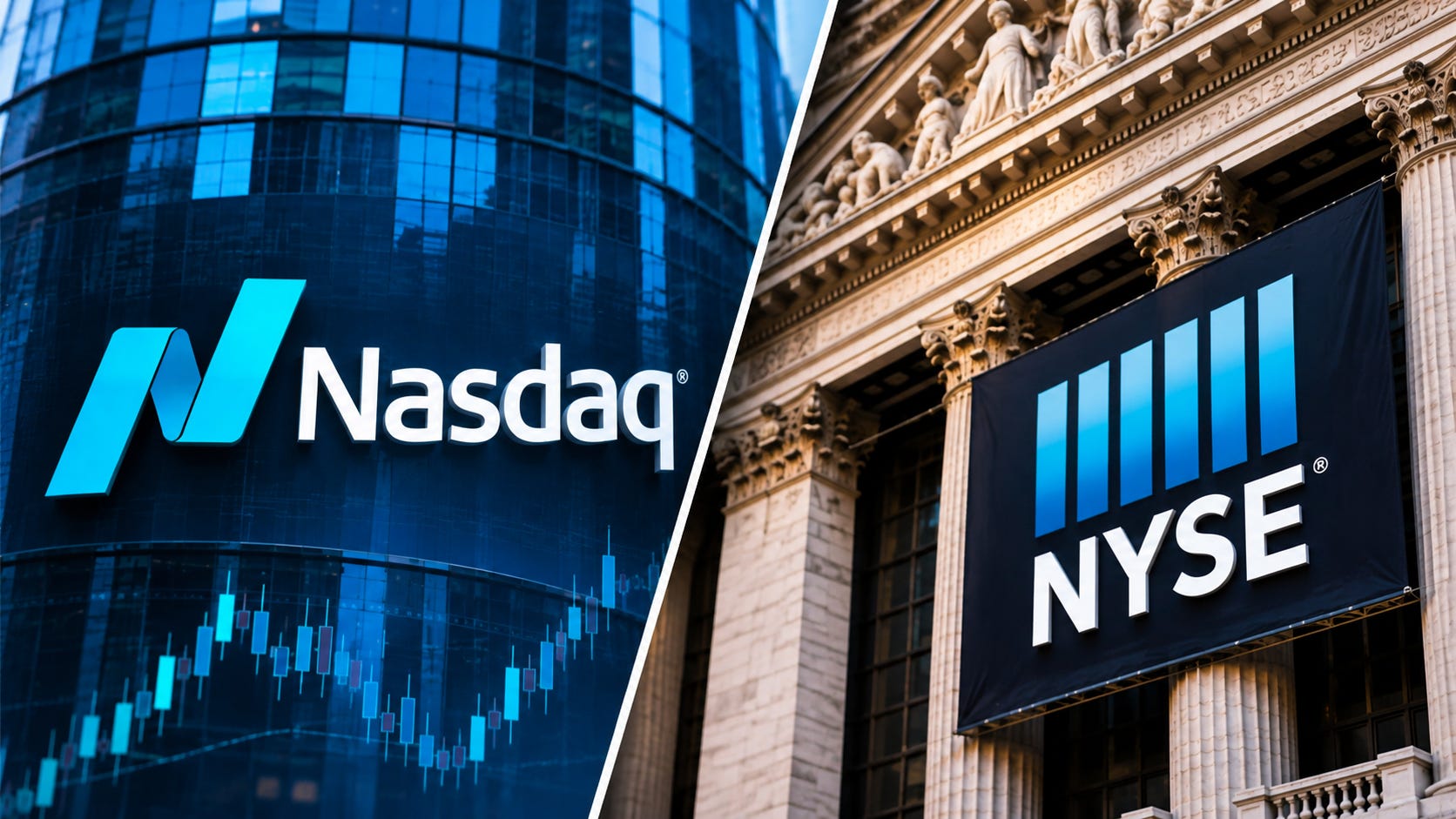
Issuers have pushed back en masse since OKX and NYSE parent ICE announced last month that they planned to tokenize shares of 62 major public companies under the SEC’s Innovation Exemption.
As of Monday, 50 companies had filed objection notices with the joint venture, including JPMorgan, Walmart, Nvidia, Coca-Cola and Goldman Sachs. Of those, 43 were on OKXICE’s original list, meaning nearly 70% of the companies it initially proposed to tokenize have objected.
The reasons vary. Some companies are concerned about how tokenization could affect their share price, liquidity and volatility, while others are taking a wait-and-see approach amid questions around shareholder rights, custody and market transparency.
But Crypto in America has learned there’s more to the wave of objections than concerns about tokenization itself.
An executive at a Nasdaq-listed company told Crypto in America that a Nasdaq representative urged the company to object to OKXICE’s plan to tokenize its shares under the SEC’s new tokenized securities venue (TSV) framework.
“Our Nasdaq rep had reached out to us regarding OKX listing, suggesting we should object and that they would hold a call to discuss why,” the executive said. “Nasdaq is definitely partly behind this.”
Separately, a source familiar with issuer discussions said some companies have raised concerns about OKX’s offshore domicile.
A Nasdaq spokesperson declined to comment on allegations that its representatives urged listed companies to object to OKXICE’s tokenization plans, but reiterated the exchange’s position that TSVs are not the best path to tokenization.
Nasdaq has also faced questions over a recent Wall Street Journal ad urging companies to object to having their shares tokenized. A QR code in the ad linked to a Nasdaq FAQ explaining why the exchange has chosen to stay out of TSVs, fueling speculation that Nasdaq was behind it.
The ad, paid for by a conservative-leaning nonprofit, warned CEOs about the risks of tokenization. Who ultimately funded the campaign remains unclear.
Nasdaq denied any involvement, saying it had never contributed to the group or authorized the use of its FAQ or a link to it in the ad.
Could this be a case of old-fashioned competition between the two biggest names in traditional stock trading? Perhaps. Nasdaq partnered with crypto exchange Kraken earlier this year to develop the Nasdaq Equity Token, aiming to bring stocks onchain within existing securities rules rather than through the SEC’s experimental TSV framework. Andrew Cuomo, who is leading the OKXICE joint venture, highlighted the competition angle on a press call Thursday. The former New York governor said the WSJ ad means “game on,” arguing that the question is no longer whether tokenization will happen, but which venues companies will choose.
The wave of objections also raises questions about whether the SEC’s experiment can succeed in its current form.
During a Crypto in America interview in September, then-SEC Commissioner Hester Peirce was asked whether enough issuers could object to undermine the model before it even got off the ground.
“There may be folks who say, no, that’s why we built it in so that people could. But I expect pretty broad excitement,” she said.
Figure CEO Mike Cagney raised a similar question on X: “With everyone opting out, is it even a sandbox anymore?”

For now, though, 19 companies on OKXICE’s original list have yet to object. The venture’s initial 30-day notice period expires Tuesday, November 3, potentially clearing the way for trading under the SEC’s innovation exemption. Individual companies may still have time to object, depending on when they received notice.
Meanwhile, rival venue TSV LLC could beat OKXICE to the punch, with trading in tokenized shares of Nasdaq-listed Canton Strategic Holdings expected to begin as early as Monday.
There’s a catch, though. TSV is starting with just one company, which is affiliated with the Canton Network it operates on. And unlike OKXICE, it has the issuer’s backing from the outset, allowing it to bypass the separate 30-day issuer objection process.
It’s Election Eve: What’s at Stake for Crypto in the Midterms?

After pouring more than $170 million into this year’s midterm elections, the crypto industry is about to find out whether another hefty political investment will pay off.
America heads to the polls Tuesday with control of Congress up for grabs and the industry’s biggest legislative priority, the Clarity Act, having stalled in the Senate.
Crypto’s biggest super PAC, Fairshake, and its affiliates have spent roughly $154 million backing and opposing candidates this cycle, while the Winklevoss-backed Digital Freedom Fund and Fellowship PAC, which has ties to Cantor Fitzgerald and Tether, have also dumped millions into various races.
The industry has scored major policy wins over the past two years, from landmark stablecoin legislation to friendlier regulation at the agencies and broader adoption across Wall Street. But this election will test just how durable those gains are. The next Congress could determine whether market structure legislation gets another shot, whether crypto tax reform moves forward and how aggressively Democrats scrutinize the Trump administration’s crypto policies.
With polls and prediction markets pointing to Democrats taking control of the House, the Senate remains less certain. As of Monday, Polymarket traders were pricing a 94% chance of Democrats winning the House, compared with 69% for the Senate.
Races to Watch
Ohio Senate — Sherrod Brown vs. Jon Husted: The biggest crypto money fight of the cycle. Crypto-backed PACs have poured nearly $64 million into supporting Republican incumbent Jon Husted and opposing former Democratic Senator Sherrod Brown, including roughly $56 million from Fairshake affiliate Defend American Jobs and another $7.2 million from the Winklevoss-backed Digital Freedom Fund.
Of all the individual races, this one could have the biggest implications for the crypto industry. Brown’s return to Washington could put him in line for a leadership role on either the Senate Banking or Agriculture Committee, both central to crypto regulation. The former Banking chairman has long been a critic of the industry, a factor behind Fairshake’s roughly $40 million push to replace him with Republican Bernie Moreno just two years ago.
Nebraska Senate — Pete Ricketts vs. Dan Osborn: Crypto-backed groups have spent nearly $14 million in this race, including approximately $13.5 million from Fairshake affiliate Defend American Jobs opposing independent challenger Dan Osborn. Fellowship PAC also spent $350,000 supporting Republican incumbent Ricketts during the primary. Ricketts sits on the Senate Banking Committee and has supported crypto legislation.
Alabama Senate — Barry Moore vs. Everett Wess: Fairshake affiliate Defend American Jobs spent more than $12 million helping Republican Rep. Barry Moore win his Senate primary. Moore has backed the GENIUS and Clarity Acts and introduced legislation to establish a strategic Bitcoin reserve. He faces Democrat Everett Wess in the race to succeed retiring Republican Senator Tommy Tuberville, who’s on track to be the next Governor of Alabama.
Maryland’s 5th District — Adrian Boafo vs. Chris Chaffee: Fairshake affiliate Protect Progress spent more than $5 million helping Democrat Adrian Boafo win the primary for retiring Rep. Steny Hoyer’s House seat. Boafo now faces Republican Chris Chaffee in the general election in Maryland’s heavily Democratic 5th Congressional District.
The House: Fairshake is also backing dozens of House candidates from both parties, including Republicans French Hill, Bryan Steil and Bill Huizenga, and Democrats Janelle Bynum, Derek Tran and Steven Horsford. The results will help determine the makeup of the next Congress’s crypto-friendly coalition in the lower chamber.
👀 What To Watch This Week

Midterms Take Center Stage: Americans head to the polls Tuesday with control of Congress up for grabs and more than $170 million in crypto political spending on the line. The results could reshape the path forward for crypto legislation, including the stalled Clarity Act, tax legislation and how much scrutiny will be placed on the Trump Administration’s crypto initiatives.
Binance Faces Its First Big Test Since the Hack: Just days after suffering the largest crypto theft in history, with an estimated $6.3 billion stolen, Binance reopened withdrawals Sunday. Customers pulled a net $3.64 billion on the first day, while the exchange says it has already replaced roughly 95% of the stolen assets using its own reserves. Bitcoin, meanwhile, was holding steady near $78,000 Monday.
Jobs Report Caps a Big Week for Economic Data: Job openings kick things off Tuesday, followed by ISM services Wednesday and weekly jobless claims Thursday. Friday’s October jobs report is the main event, offering a fresh look at the U.S. labor market after the Fed’s latest decision to hold rates steady.
Monday
10:00 AM: The ISM Manufacturing PMI for October is released, offering a fresh look at U.S. factory activity and whether the manufacturing sector is expanding or contracting.
Tuesday
Block (XYZ) reports earnings after the closing bell.
10:00 AM: September’s JOLTS job openings report is released.
OKXICE’s initial 30-day notice period expires, potentially clearing the way for trading under the SEC’s Innovation Exemption, though individual issuer objection windows may remain open.
Wednesday
Circle (CRCL), Riot Platforms (RIOT) and Hut 8 (HUT) report quarterly earnings.
8:15 AM: ADP releases its October private sector employment report.
8:30 AM: The Treasury Department releases its quarterly refunding announcement, offering investors an updated look at government borrowing plans.
10:00 AM: U.S. ISM Services PMI for October is released, offering a snapshot of business activity across the services sector, which accounts for the bulk of the U.S. economy.
Thursday
Core Scientific (CORZ) reports earnings.
7:00 AM: The Bank of England is widely expected to raise interest rates by 25 basis points to 4%, its first hike in more than three years, as inflation pressures mount.
8:30 AM: The Labor Department releases weekly jobless claims
Friday
TeraWulf (WULF) reports earnings.
8:30 AM: Jobs Friday — The Labor Department releases October’s jobs report and the unemployment rate.
10:00 AM: The University of Michigan releases its preliminary November consumer sentiment reading.
Remember: New editions of the Crypto In America newsletter drop every Monday and Thursday.
If you like what you’re reading, don’t forget to subscribe!