
Welcome to the Thursday edition of the Crypto In America newsletter!
What you’ll read: Patrick Witt leaves the White House, raising questions about the future of Trump’s crypto council. Fairshake ramps up Senate spending but holds fire on Clarity Act holdouts. Plus, this week's headlines and KAST’s CEO on the podcast.
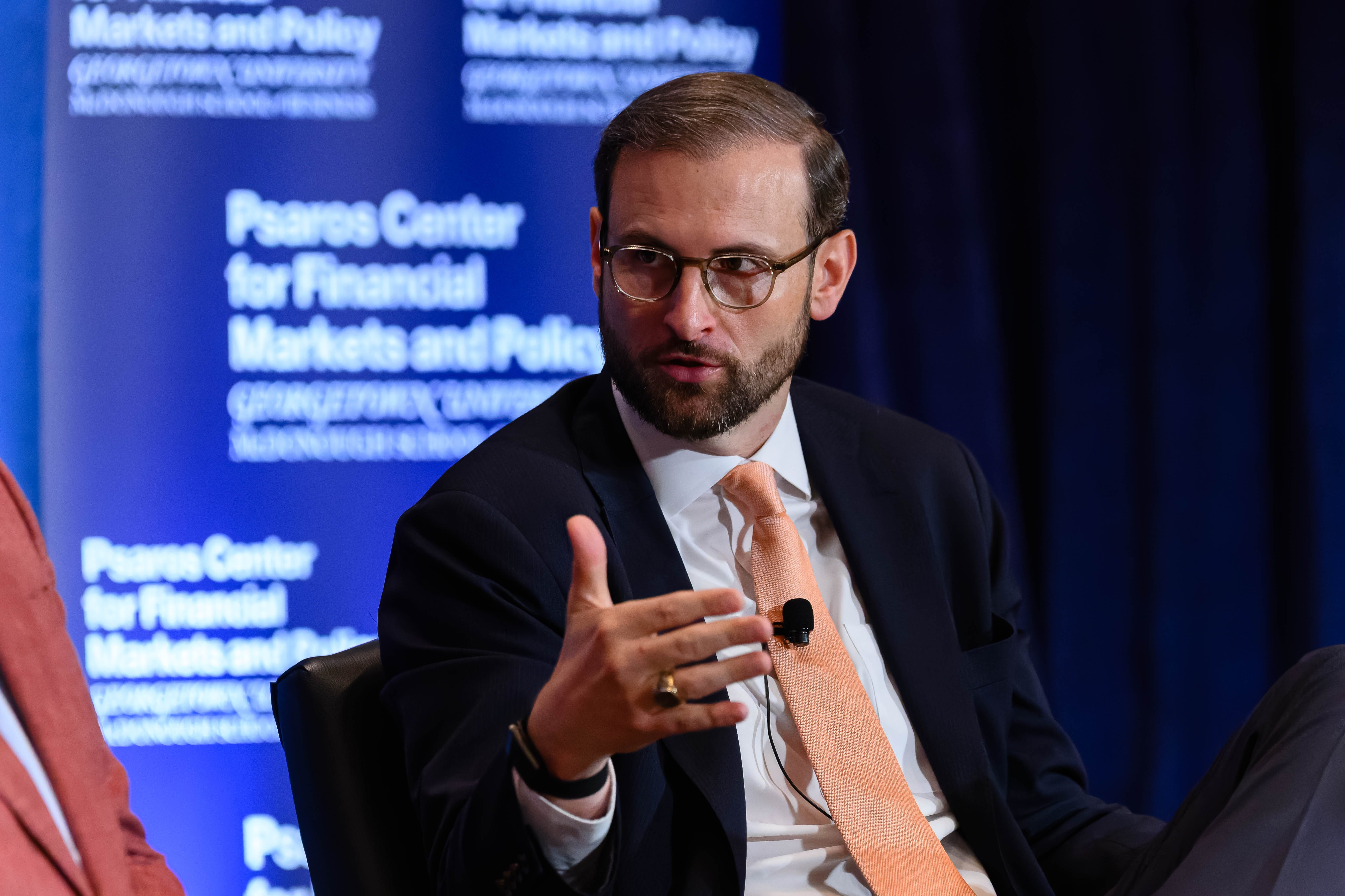
The last remaining official on the White House Crypto Council has departed the administration, raising questions about the council’s future and whether crypto remains a priority for the White House following the Clarity Act’s failure to advance in the Senate last month.
Patrick Witt, who served as the council’s executive director for just over a year, has left the role after his temporary detail from the Defense Department expired, a White House official confirmed to Crypto In America.
“The White House appreciates his service to the Trump administration and wishes him the best in his future endeavors,” the official said.
Witt confirmed his departure in a lengthy post on X, calling his time in the administration the “privilege of a lifetime.” He also teased his next chapter in the private sector, saying he would have “more to share soon.”
Praise for Witt has poured in from industry leaders and lawmakers alike, commending his work on the Clarity Act and other administration initiatives.


Witt succeeded Bo Hines as executive director after Hines left the White House in August 2025 to lead Tether’s U.S. operations. Witt had been running the council alone since Deputy Director Harry Jung and staffer Nick Elliot, both detailed from the CFTC, departed earlier this summer. Jung later joined Nxum Group, a consulting firm co-owned by Hines and his father.
The Wall Street Journal reported Wednesday that Nxum earned $6.3 million from a Tether-related deal, with payments beginning while Hines was still serving in the White House. Nxum denied that Hines knew about the dealings or received Tether funds while in office.
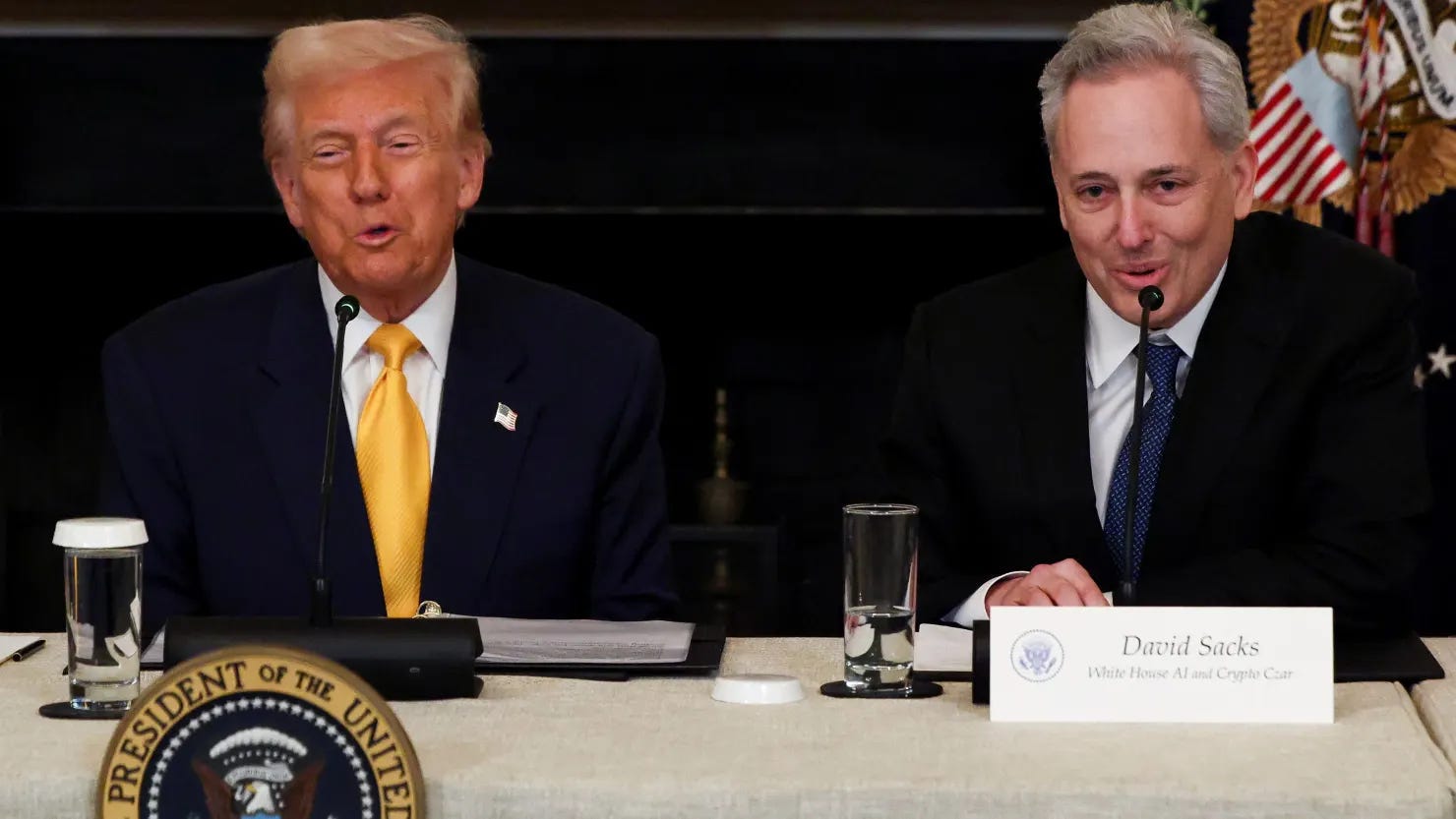
David Sacks, Trump’s AI and crypto czar who oversaw the council, also left his role earlier this year after his tenure as a special government employee expired. Sacks now co-chairs the President’s Council of Advisors on Science and Technology, where he continues to advise Trump on technology policy.
He was also among those praising Witt following his departure, calling him “one of the sharpest people I’ve worked with in government.”
Witt’s exit comes at a critical juncture for the crypto industry. With the Clarity Act stalled in the Senate, attention has shifted to federal regulators, particularly the Securities and Exchange Commission and Commodity Futures Trading Commission, as the industry looks to them to advance the administration’s pro-crypto agenda.
But other initiatives remain unfinished. Among them is the strategic Bitcoin reserve, on which Witt teased a mysterious “big announcement” months ago that never materialized, leaving Bitcoin enthusiasts wondering what the administration has planned for the reserve.
Then there’s crypto tax legislation, currently being discussed in the House Ways and Means and Senate Finance Committees, with reforms the White House itself called for in its 160-page digital assets report last year.
Witt’s departure now raises questions about who, if anyone, is coordinating those efforts from inside the White House.
“With Patrick gone, it’s not clear there’s anyone steering the ship over in the administration when it comes to crypto,” said an industry source who requested anonymity. “If they get rid of the council, the messaging there isn’t great.”
Another industry source said Witt’s departure was unsurprising, given that advancing the Clarity Act had been the council’s main priority following the passage of the GENIUS Act last year. While some are holding out hope for a revival during the lame duck session, others are far less optimistic.
“We all know there’s zero chance of the Clarity Act passing this year,” the source said.
A White House press official did not respond to a follow-up request for clarification on whether the council has been dissolved or whether a new executive director will be appointed.
Fairshake Ramps Up Senate Spending, But Holds Fire on Clarity Act Holdouts
With less than three weeks until the midterm elections, the crypto industry’s largest super PAC is ramping up its election spending plans in at least two key Senate races: Ohio and Nebraska.
In Ohio, Fairshake affiliate Defend American Jobs has increased its planned advertising against Democrat Sherrod Brown, who is challenging Republican Senator Jon Husted, by $15 million, bringing its total commitment to around $45 million. That’s $4 million more than the roughly $41 million the group spent helping Republican Bernie Moreno unseat Brown in 2024.
The spending blitz reflects concerns within the crypto industry that Brown, who chaired the Senate Banking Committee before losing his seat two years ago, could return to Washington and reclaim a leadership role on either the Senate Banking or Agriculture Committee. Both oversee key regulators of crypto markets, the SEC and CFTC, respectively, and would play central roles in any future effort to pass crypto legislation.
Fairshake has also committed roughly $7.5 million in advertising to support Republican Senator Pete Ricketts, also a member of the Banking Committee, who is facing a competitive challenge from independent Dan Osborn in Nebraska.
Backed by some of the crypto industry’s biggest donors, including Coinbase, Andreessen Horowitz and Ripple, Fairshake and its affiliates have spent roughly $56 million on the 2026 general election, according to a spokesperson for the group. Their plans include supporting 32 pro-crypto House candidates across both parties, with at least $1 million each earmarked for Democrats Janelle Bynum (OR), Steven Horsford (NV) and Derek Tran (CA), and Republicans French Hill (AR), Bill Huizenga (MI) and Bryan Steil (WI).
Despite its aggressive spending in other Senate races, Fairshake has yet to announce plans to target any sitting senators who voted against advancing the industry’s landmark market structure legislation last month, even as some crypto advocates have called for electoral consequences. Among those up for reelection are Democrats Mark Warner of Virginia and Cory Booker of New Jersey, both of whom played key roles in Clarity Act negotiations, and Republican Susan Collins of Maine, who broke with her party to oppose advancing the bill.
Warner and Booker are not facing competitive contests, leaving Fairshake with few viable alternatives to support. Collins, however, faces a competitive challenge from Democrat Troy Jackson, who has not publicly taken a position on digital assets.
According to a source familiar with the group’s thinking, Fairshake had discussed spending several million dollars against Collins after the Clarity Act failed to advance in September. The group has not announced any plans to spend against Collins or in support of her opponent, and it remains unclear whether it intends to do so.
Another industry source noted that targeting Collins could backfire if it helped Democrats take control of the Senate, potentially complicating the industry’s legislative priorities.
“If the Senate flips, then Elizabeth Warren and potentially Sherrod Brown will be up for leadership roles,” the source pointed out. “So it would be the industry cutting off its nose to spite its face.”
Warren, currently the ranking Democrat on the Senate Banking Committee, has long been one of crypto’s fiercest critics, while Brown was a vocal opponent of the industry during his tenure as committee chairman.
A Fairshake spokesperson declined to comment on whether the group plans to spend in any additional Senate races before Election Day.
News Flash

ICYMI: Here are some of the biggest headlines shaping the week.
Strategy Faces MSCI Index Ouster: New rules could exclude digital asset treasury companies like Strategy, Metaplanet and SharpLink from MSCI’s global equity benchmarks, potentially triggering billions in passive fund selling. A final list of affected companies is due November 11.
Inflation heats up: September CPI rose 3.7% annually, while wholesale prices jumped 1.3% for the month, fueling concerns about another Fed rate hike.
Bitcoin hovers around $82,000: BTC remains under pressure following hotter-than-expected inflation data and renewed concerns about interest rates.
OCC targets October for GENIUS Act final rule: Comptroller Jonathan Gould says the agency expects to issue its final rule implementing the stablecoin law before the end of the month.
SEC approves Cboe’s KPI-linked binary options: The exchange received the green light to list contracts tied to performance metrics reported by public companies, including Coinbase, Robinhood and MARA.
OCC finds reputational risk policies at nine major banks: A new report finds all nine of the largest national banks reviewed had policies allowing reputational concerns to influence banking decisions, with crypto among the industries affected.
XRP treasury firm Evernorth makes Nasdaq debut: The company began trading under the ticker XRPN, with a treasury of approximately 473 million XRP.
WSJ: Tether payments to Bo Hines-linked firm began during White House tenure: Nxum, a company co-owned by the former White House crypto adviser, reportedly earned $6.3 million from a Tether-related deal. The firm denies Hines knew about the dealings or received Tether funds while in office.
Crypto trade groups seek faster court ruling on Illinois tax: Crypto Council for Innovation and the Blockchain Association moved to expedite a legal challenge to the state’s 0.2% digital asset tax, which is now stayed until July 2027.
Ledger hardware wallets compromised in nearly $93 million crypto theft: The company confirmed criminals planted hidden devices inside wallets to steal users’ recovery phrases, prompting sales suspensions across parts of Asia and Europe. Ledger says its own systems were not breached.
BNY and Citadel Securities complete first-of-its-kind tokenized Treasury repo: The transaction uses a tokenized two-year U.S. Treasury note as collateral on a major triparty repo platform.
Bank of America hit with $1.2 billion fine over money laundering failures: Federal regulators found the bank failed to properly monitor and report more than $5 billion in suspicious transactions, including activity linked to potential illicit finance risks.
From Crypto Cards to Global Banking: KAST CEO on Stablecoins and America’s Edge
On this week’s podcast episode, the team sat down with KAST CEO Raagulan Pathy at Korea Blockchain Week to discuss stablecoins, global banking and why he believes America is uniquely positioned to lead in crypto.
What started as a stablecoin-powered card offering is evolving into something much bigger. Pathy discussed KAST’s expansion into a broader financial platform serving individuals, businesses and institutions. At the heart of that evolution is growing global demand for access to U.S. dollars. Pathy explained how stablecoins are making it easier for people and businesses around the world to hold, send and spend dollars without relying on traditional banking infrastructure.
And despite KAST’s global footprint, Pathy believes America has a unique opportunity to shape the future of digital finance. With the dollar already dominating global trade and capital markets, he argues that U.S. leadership in crypto could set the tone for the rest of the world.
“When America does it, then everyone else is going to follow. It should 100% lean into it.”
Catch the full episode on all platforms here.
Remember: New editions of the Crypto In America newsletter drop every Monday and Thursday.
If you like what you’re reading, don’t forget to subscribe!