

Welcome to the Monday edition of the Crypto In America newsletter!
What you’ll read: A top crypto advocacy group is surveying 2026 candidates, Elizabeth Warren finds rare common ground with the crypto industry, and what to watch this week.

Stand With Crypto, one of the industry’s top advocacy groups, is gearing up for the 2026 midterms by surveying federal and state candidates on where they stand on key crypto issues, Crypto In America has learned.
The survey, sent out this week, asks candidates about their views on individual rights to custody digital assets, innovation, de-banking, crypto mining, consumer protections, and more. It also asks whether they have personally bought, sold, or used cryptocurrency or blockchain apps.
Backed by Coinbase, Stand With Crypto runs grassroots advocacy nationwide and offers an online tool that grades politicians on their crypto friendliness from A to F. The tool gained popularity in the 2024 election, and SWC says new survey data will be used to update it for the midterms.
“Crypto is already having a transformational impact on our economy, and we need pro-crypto candidates to ensure the U.S. maintains its dominant global position,” said Stand With Crypto’s Community Director, Mason Lynaugh.
It’s unclear whether crypto will have as big an impact in the midterms as it did last year, when industry-backed super PACs spent over $130 million to influence races and helped elect more than 250 pro-crypto candidates to Congress. But industry leaders say they aren’t backing down just yet.
“We’re not going to stop. We’re going to be relentless,” said Coinbase President and COO Emilie Choi on a recent episode of the Crypto In America podcast. “The midterms are going to be very important, and we want crypto to be front and center.”
Elizabeth Warren Backs Crypto in Fight to Keep Open Banking Rule
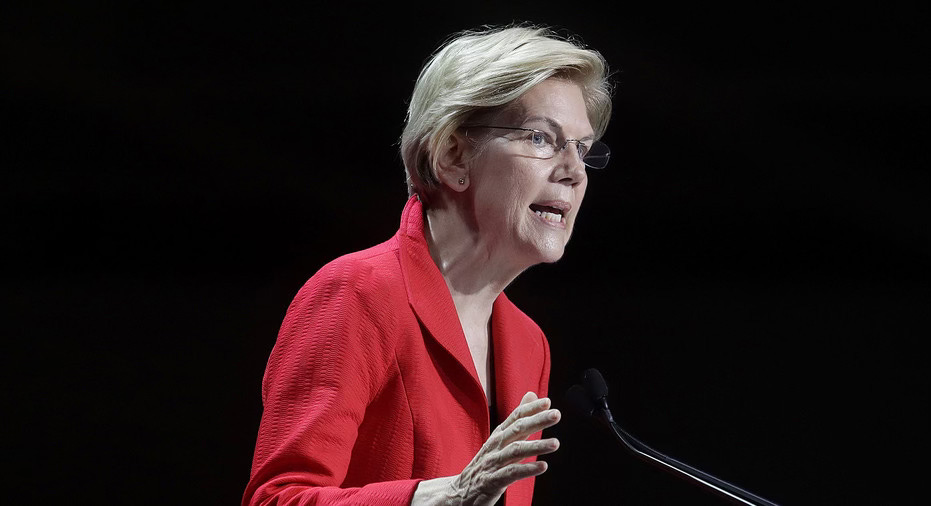
Crypto has found an unlikely ally in its fight to preserve the open banking rule.
In a letter last week, Senator Elizabeth Warren (D-MA) urged the Consumer Financial Protection Bureau to bar banks and data providers from charging consumers fees to access their financial data — a rare point of agreement with an industry she has so often clashed with.
Like Warren, crypto companies also want the CFPB to reinstate the 2024 Personal Financial Data Rights rule in full. The rule, an extension of Section 1033 of the Dodd-Frank Act, gives consumers control over their financial data and makes it easier to share it with authorized third parties they choose to link their bank accounts to.
Big banks like JPMorgan have pushed back on the rule, citing competition and cybersecurity concerns. They argue that broad third-party access could threaten consumer data security. Banks also believe they should be compensated for providing unfettered access to consumer data, which is considered extremely valuable because it gives unique insights into customer spending habits.
Crypto argues that the open banking rule promotes competition in payments, helps startups gain a foothold, and prevents them from paying exorbitant fees to big banks like JPMorgan for access to highly valuable data — fees, they say, that could cripple smaller companies trying to enter the payments space.
The Trump-era CFPB, led by Acting Director Russ Vought, has initiated rulemaking that could substantially change the rule. In the last few months, banks, crypto firms, and payments companies have been lobbying the agency heavily during the comment period to secure a favorable outcome. The deadline for public comments was October 21.
Warren’s letter, co-signed by Sens. Ron Wyden (D-OR) and Richard Blumenthal (D-CT), warned that eliminating or changing the rule could result in giving banks a monopoly over consumer data, limit choice and stifle competition.
“We believe the CFPB should reinstate the Personal Financial Data Rights rule promulgated in 2024,” they wrote. “Any significant dilution of its requirements would likely violate the law.”
On the House side, Financial Services Committee Chairman French Hill (R-AR) and Vice Chair Bill Huizenga (R-MI) also sent a letter to the CFPB on Friday, urging the agency to preserve consumers’ ability to share their financial data with authorized third parties.

The financial rails of the future are being built on Avalanche. Just ask Citi, JP Morgan, Blackrock or Dinari.
Find out how Avalanche is accelerating global finance.
👀 What To Watch This Week
All is quiet in the nation’s capital this week as lawmakers are home for Thanksgiving, and little action is expected from regulators. Still, a few crypto ETFs will debut on Wall Street and some delayed economic data is set to hit the tape.
Monday
9:30 AM: Franklin Templeton’s XRP ETF debuts on NYSE Arca under the ticker $XRPZ, while Grayscale’s Dogecoin ETF ($GDOG) and its XRP ETF ($GXRP) also begin trading.
A new layer‑1 blockchain Monad is launching its public mainnet, along with its native token, $MON.
Tuesday
8:30 AM: The Commerce Department will release delayed September retail sales data, and the BLS will publish the delayed September producer price index.
10:00 AM: The Conference Board releases its November consumer confidence survey.
4:00 PM: Bitcoin miner CleanSpark (CLSK) reports fiscal fourth-quarter earnings.
Wednesday
9:30 AM: Bitwise’s Dogecoin ETF will launch on NYSE Arca under the ticker $BWOW.
Thursday
🦃 Happy Thanksgiving!
Remember, new editions of the Crypto In America newsletter drop every Monday, Wednesday and Friday at 7AM EST.
If you like what you’re reading, don’t forget to subscribe!