
Welcome to the Monday edition of the Crypto In America newsletter!
What you’ll read: The low-down on the yield compromise and the next steps for the Clarity Act; BlackRock weighs in on tokenized stablecoin reserves; what we’re watching this week; and a roundup of the biggest stories.
The Clarity Act on Friday moved a step closer to a vote in the Senate Banking Committee following the release of the long-awaited terms of a compromise between crypto and banking stakeholders. The two sides have been wrangling for about three months to decide how companies should offer customers yield and rewards on stablecoin holdings.
In a nutshell, the compromise lets crypto firms offer rewards tied to stablecoin usage and activity, but prohibits them from paying yield on idle balances. For example, users can earn perks, like cashbacks, on transactions, or free or discounted memberships tied to platform usage, but cannot earn APY on funds simply sitting in an account.
In other words, stablecoins can’t mimic traditional bank accounts or high-yield savings products, as many in the crypto industry had hoped. Instead, payment stablecoins will be used for, well, payments.
As reactions on X make clear, the deal is exactly that — a compromise. Many in the crypto industry are arguing the blanket ban on offering yield hands a win to the banks, while banks are voicing concerns privately that the compromise doesn’t go far enough to prevent crypto companies from finding loopholes, despite a clause that restricts “economically or functionally equivalent” rewards.
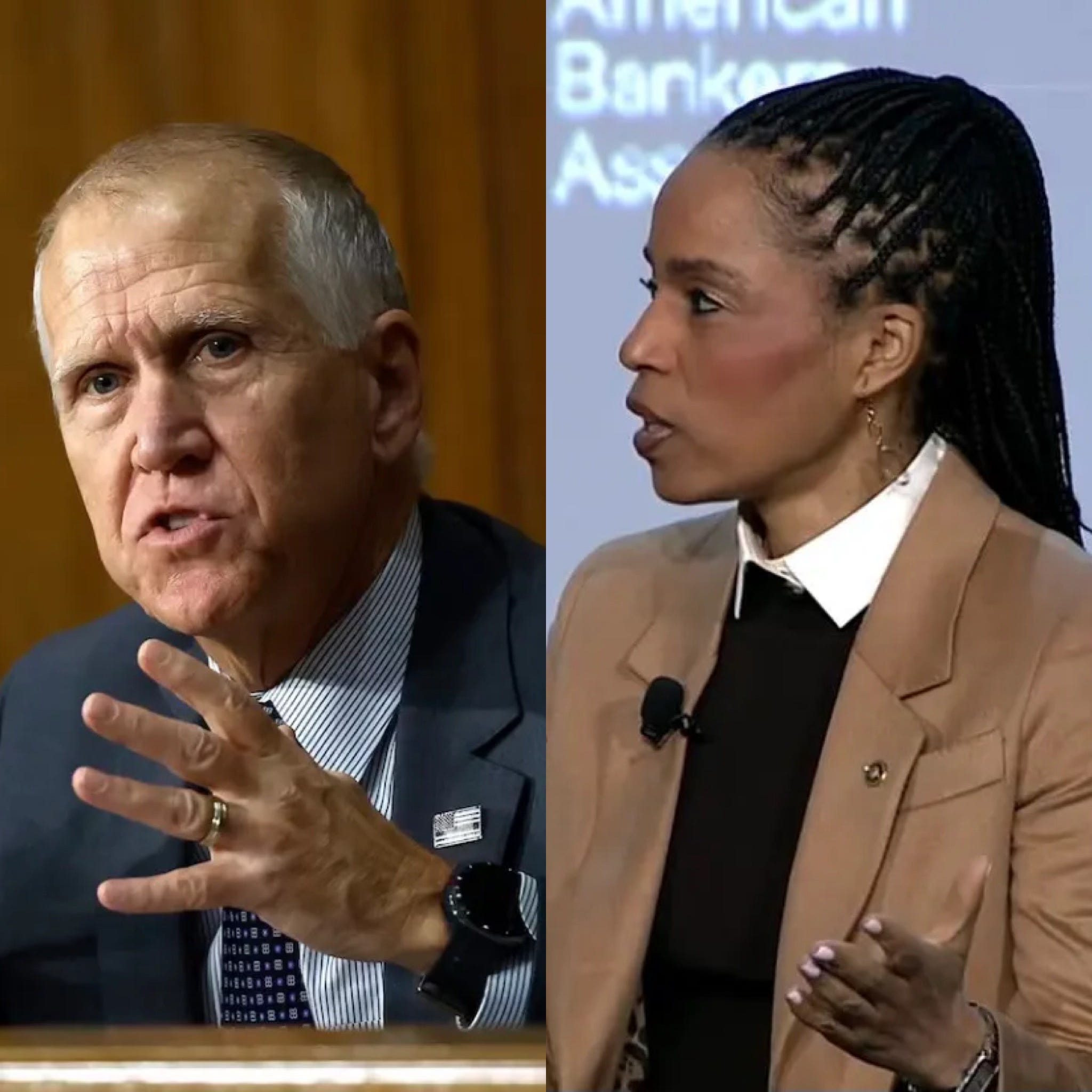
Broadly, stakeholder feedback reflects what lead negotiators, Senators Thom Tillis (R-NC) and Angela Alsobrooks (D-MD), had predicted.
“All of us will probably walk away just a little bit unhappy,” Alsobrooks told a gathering of American Bankers Association members in March.
Crypto trade groups, including the Blockchain Association, Crypto Council for Innovation, and the Digital Chamber, which represent a large swath of the industry, issued statements supporting the compromise and urging the Senate Banking Committee to move quickly to a markup.
Some feel that while the compromise isn’t ideal, it’s enough to move forward and give the rest of the bill a chance.
“In the context of Clarity, the industry should probably live with this, but the banks are clearly winning this volley,” said Austin Campbell, founder of Zero Knowledge Consulting.
Banks, meanwhile, have yet to weigh in publicly since the release of the yield compromise but have ramped up calls for changes in recent weeks, arguing the deal doesn’t go far enough to prevent deposit flight or mitigate broader financial stability risks.
As one Senate Banking staffer put it Friday: “Time for everyone to move on from yield. Banks should not turn a modest win into a loss.”
Notably, Coinbase has signed off on the compromise text. The exchange had pulled support for the Clarity Act in January citing concerns that the bill’s language favored banks too heavily, which led to the collapse of a planned markup.
Still, Coinbase asserted that banks have secured additional concessions compared to crypto. “In the end, the banks were able to get more restrictions on rewards, but we protected what matters – the ability for Americans to earn rewards, based on real usage of crypto platforms and networks,” said Coinbase’s Chief Policy Officer Faryar Shirzad.
The exchange’s CEO Brian Armstrong simply tweeted “Mark it up,” drawing backlash on X from users who said he was the reason the bill has been stalled since January.
The yield text’s release has cleared one of the final hurdles for the Act before Chairman Tim Scott (R-SC) is expected to schedule a Senate Banking Committee markup, which some industry leaders believe could be announced later this week and held the week of the 11th, when Congress returns from recess. The only other window for a markup in May would be the week of the 18th, before the Senate departs for Memorial Day recess.
In the meantime, finishing touches on DeFi provisions, specifically the Blockchain Regulatory Certainty Act (BRCA) and protections for software developers, are likely to be done this week, according to industry insiders. Senator Chuck Grassley (R-IA), Chairman of the Senate Judiciary Committee, is expected to weigh in on changes to the text surrounding Section 1960, which would prohibit safe harbors for software developers who knowingly facilitate money laundering.
Grassley’s sign-off would resolve one of the key sticking points around DeFi that has drawn scrutiny from law enforcement in recent weeks, amid concerns the bill could limit their ability to police illicit activities.
“Things are looking up. The next two weeks are going to be critical, and the time pressure is a good forcing function to get this across the finish line before the mid-terms,” one DeFi industry leader told Crypto In America. “But it has to be bipartisan. Without Democrats on board, [the bill] doesn’t get done, and the industry has done enough to earn that support.”
It’s unclear whether the markup will be bipartisan or pass along party lines, as it did in the Senate Agriculture Committee in January.
Meanwhile, issues around ethics are still being “actively negotiated,” according to sources familiar with the process. Talks are likely to continue even after the bill passes through the Senate Banking Committee, given that other Senate offices have greater jurisdiction over the issue.
Some in the industry have started referring to the ethics provisions as the bill’s “poison pill,” pointing to concerns from Democrats, and now potentially Republicans like Tillis, that President Trump’s family crypto dealings could jeopardize the legislation’s final passage.
That concern is underscored by recent data. According to Forbes, crypto accounts for roughly one-third of Trump’s $6.5 billion fortune, or about $2.1 billion. A new CoinDesk poll, meanwhile, found that 73% of voters oppose senior government officials having business ties with the crypto industry.
BlackRock Warns Against Cap on Tokenized Stablecoin Reserves
BlackRock is pushing back on key aspects of the Office of the Comptroller of the Currency’s proposed stablecoin rules under the GENIUS Act, warning reserve asset restrictions could undermine liquidity, flexibility, and adoption.
The $13 trillion asset manager says it supports the proposal but wants targeted changes, including to the proposed 20% cap on tokenized reserve assets.
Such a cap would directly affect products like BlackRock’s BUIDL money market fund, which has roughly $2.6 billion in AUM and serves as a major stablecoin reserve asset, providing about 90% of the backing for Ethena’s USDtb and Jupiter’s JupUSD. BlackRock argues an asset’s tokenized form should not be the basis for imposing a cap.
“A categorical limit on tokenized assets would not be appropriate because risk is driven by credit quality, duration, and liquidity, not whether an asset is held on a distributed ledger,” reads the letter, written by Benjamin Tecmire, the firm’s head of Regulatory Affairs, and Roland Villacorta, its global head of Liquidity and Financing.
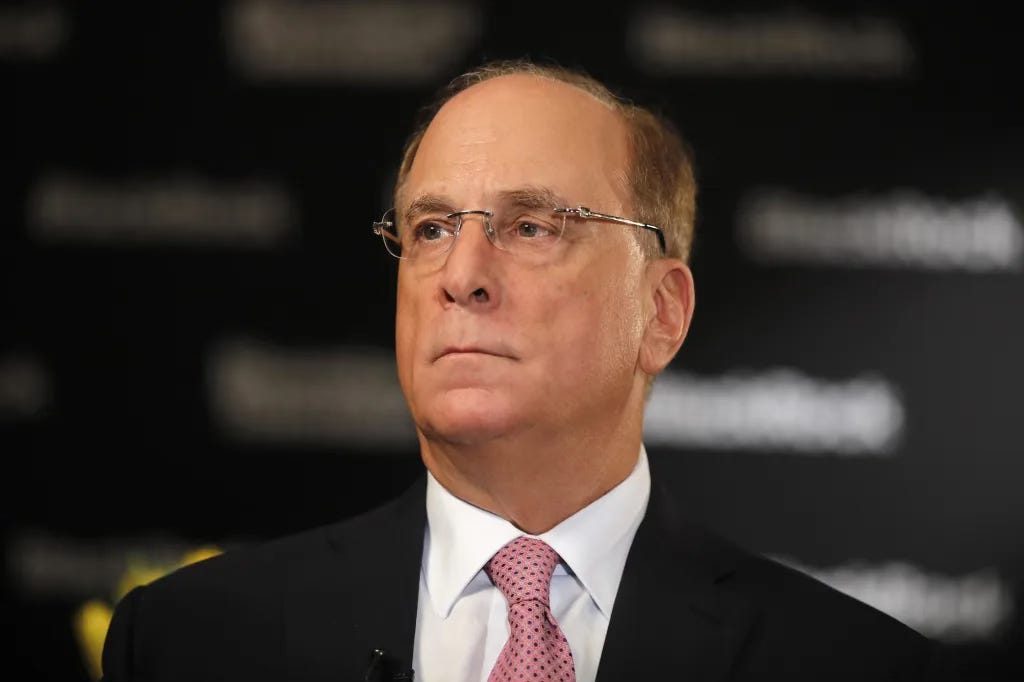
BlackRock CEO Larry Fink has been particularly bullish on tokenization, writing in his annual shareholder letter that digital wallets and tokenized assets could modernize markets, and expand investor access to Wall Street.
Beyond tokenized assets, BlackRock is pushing the OCC to preserve flexibility in how stablecoin reserves are structured, including explicitly allowing Treasury ETFs and expanding the pool of eligible reserve assets.
The response to the OCC comes as BlackRock positions itself to serve stablecoin issuers, adapting existing products like its Select Treasury Based Liquidity Fund (BSTBL) to better support stablecoin reserves.
“Balancing these goals requires a proportionate and flexible regulatory approach that accounts for how stablecoin issuers operate today and adapts to future market developments,” the letter from Tecmire and Villacorta says.
The OCC’s 376-page proposal has received more than 22,000 comments, according to the agency’s website.
👀 What To Watch This Week

Monday
The House and Senate are out on recess.
Day 1 of the Medici LA Conference will be held in Beverly Hills, where Crypto In America’s Eleanor Terrett will interview Rep. Bryan Steil (R-WI) at 10:30 a.m.
Tuesday
Strategy (MSTR) and MARA Holdings (MARA) report earnings after the closing bell. PayPal (PYPL) announces earnings before the opening bell.
Day 1 of CoinDesk’s Consensus kicks off in Miami. The three-day event will feature speakers from across the crypto industry, including lawmakers such as Senators Kirsten Gillibrand (D-NY) and Ashley Moody (R-FL), as well as policymakers like CFTC Chair Michael Selig and White House Crypto Council Executive Director Patrick Witt.
12:30 p.m.: Fed Governor Michael Barr talks banking regulation in Oxford, UK.
Wednesday
HUT8 (HUT) reports earnings before the opening bell.
Thursday
Coinbase (COIN) and Block (XYZ) report earnings after the closing bell.
8:30 a.m.: The Bureau of Labor Statistics releases Q1 productivity figures.
3 p.m.: The Federal Reserve releases March consumer credit numbers.
Friday
CleanSpark (CLSK) reports earnings after the closing bell.
8:30 a.m.: Jobs Friday: The Bureau of Labor Statistics releases the April jobs report and unemployment figures.
10:00 a.m.: The University of Michigan releases preliminary consumer sentiment figures for May.
7:30 p.m.: Fed Governor Christopher Waller, and Vice Chair for Supervision Michelle Bowman appear together on a policy panel at the Hoover Institution in California.
eToro on Why U.S. Crypto Regulation Needs Fixing
ICYMI: Last week, we sat down with Andrew McCormick, head of eToro US, to discuss what it takes to operate a crypto exchange across all 50 states.
We covered the patchwork of U.S. regulation, from securing a hard-to-come-by New York BitLicense to questions around federal preemption and the push for a national standard. McCormick also weighed in on eToro’s IPO, asset vetting, tokenization, and whether the platform would host prediction markets.
McCormick shared why he believes the Clarity Act should move forward, reflected on operating as a public company, and offered his perspective on financial literacy and the evolving U.S. crypto market.
Watch this episode on all platforms here.
Weekend News Flash

ICYMI: The biggest headlines from Friday and the weekend.
Bitcoin topped the $80,000 mark, hitting a three-month high and triggering more than $116 million in crypto liquidations, including $114 million in short positions.
The former acting director of the SEC Office of Public Affairs, Stephanie Allen, has joined stablecoin payments firm KAST as its Head of Corporate and Policy Communications. She previously served as an advisor to the SEC’s Crypto Task Force.
NYSE is moving toward tokenized trading under an SEC-released filing, allowing select stocks and ETFs to trade as usual while settling in tokenized form through a DTC pilot.
An SDNY court has blocked Arbitrum DAO from moving $71M in ETH tied to the Kelp DAO exploit as victims of a North Korea-linked attack seek to claim the funds.
Rep. Tom Emmer’s Anti-CBDC Surveillance State Act, which would permanently bar the Federal Reserve from creating a CBDC, was attached to the Foreign Intelligence Accountability (FISA) Act and sent to the Senate, where the bill awaits consideration. Senate Majority Leader John Thune (R-SD) has called the provision a “poison pill.”
New York’s Attorney General, Letitia James, secured over $5 million from trading platform Uphold for promoting a misleading crypto yield product.
The Ethereum Foundation sold another 10,000 ETH, worth about $23 million, to Tom Lee’s BitMine in its third OTC deal in two months, totaling around $47 million.
MoonPay launched its MoonAgents Card, letting AI agents spend stablecoins directly from on-chain wallets via Mastercard.
U.S. debt has surpassed 100% of GDP for the first time since World War II, according to the Bureau of Economic Analysis.
The Senate unanimously passed a resolution banning its members from trading on prediction markets.
Senators Elizabeth Warren (D-MA) and Ron Wyden (D-OR) are probing potential national security risks tied to a reported loan from Tether to a trust benefiting Commerce Secretary Howard Lutnick’s children, according to a letter they signed.
Remember: New editions of the Crypto In America newsletter drop every Monday and Wednesday.
If you like what you’re reading, don’t forget to subscribe!