
Welcome to the Wednesday edition of the Crypto In America newsletter!
What you'll read: Interest groups raise concerns about a key Clarity Act provision, crypto-backed candidates rack up primary wins, and what to watch at this morning's House Financial Services hearing on the future of payments.

Law enforcement groups that have emerged as key stakeholders in Senate negotiations over the Clarity Act remain unconvinced that the bill contains adequate safeguards against illicit finance, according to a letter sent to administration officials on Tuesday.
The missive, signed by representatives from the National District Attorneys Association, the National Association of Assistant United States Attorneys, the International Association of Chiefs of Police and the National Sheriffs’ Association, cites lingering concerns over Section 604 of the bill, better known as the Blockchain Regulatory Certainty Act. The groups argue the provision could create oversight gaps that criminal actors could exploit to facilitate narcotics trafficking, fraud, child exploitation, sanctions evasion and terrorist financing.
“Regulatory certainty should not come at the expense of accountability, transparency, victim protection, or public safety,” the groups stated.
The letter was addressed to Acting Attorney General Todd Blanche and White House Crypto Council Executive Director Patrick Witt, both of whom met with representatives from the organizations as recently as last week.
The opposition comes despite weeks of outreach from the administration, members of Congress and crypto advocacy groups aimed at winning support for the BRCA, a key provision originally sponsored by House Majority Whip Tom Emmer (R-MN). Supporters argue the measure would protect non-custodial software developers from money transmitter laws and help keep innovation in the United States.
“Our concern is not with individuals who merely write or publish software code, nor with responsible technological innovation,” the letter stated. “Rather, our concern is with broad exemptions that may shield individuals or entities whose activities facilitate the movement of digital assets, create obstacles to legitimate oversight, or weaken longstanding investigative and enforcement authorities relied upon by law enforcement.”
The letter goes beyond the BRCA, arguing the bill does not establish safeguards commonly applied to other financial intermediaries, including suspicious activity monitoring and reporting requirements, while potentially exempting some crypto participants from key AML/CFT obligations.
Notably, the National Fraternal Order of Police and the National Association of Police Organizations, both of which have been involved in the ongoing discussions, did not sign the letter.
At the same time, opposition to the BRCA appears to extend beyond traditional law enforcement groups. A coalition of Catholic organizations led by the Alliance to End Human Trafficking sent a similar letter to Senate leadership warning the provision could “weaken safeguards against illicit finance and create vulnerabilities that traffickers and transnational criminal organizations may exploit.”
So far, the industry has largely treated the BRCA as a red line in negotiations over the Clarity Act. But with support from certain Democratic lawmakers potentially dependent on winning over law enforcement groups, advocates are increasingly signaling a willingness to consider narrow changes that preserve the provision’s core protections.
Miller Whitehouse-Levine, founder and CEO of the Solana Policy Institute, who has been involved in discussions with lawmakers and staff around the BRCA, said there may be room for targeted revisions aimed at addressing concerns around criminal intent and bad actors, but drew a hard line against changes that would narrow the scope of the provision's exemptions.
“To the extent, for example, we can clarify the rule of construction to address potential concerns around specific intent or knowingly trying to do something illicit, I’m completely open to that,” he said.
However, Whitehouse-Levine said he would oppose “fundamental changes” to the provision or the categories of developers it protects, arguing such revisions would undermine the measure’s core purpose.
Crypto Cash Fuels Another Round of Primary Wins

Crypto-backed candidates came out on top in Tuesday’s slate of primaries in Maryland, New York and Utah.
Adrian Boafo, 32, declared victory in Maryland's 5th Congressional District Democratic primary to succeed retiring Rep. Steny Hoyer, the House's longest-serving Democrat, for whom Boafo once served as campaign manager.
Boafo, who introduced pro-crypto legislation in the Maryland state legislature, benefited from significant outside spending, including $5.5 million from crypto-backed super PAC Fairshake affiliate Protect Progress, which touted its role in the win.
“We went big and we went early,” a Fairshake spokesman said in a statement. “We did our part to move Adrian Boafo from fifth place to the halls of Congress. He is poised to be a leader in the largest pro-crypto Congress in history.”
Boafo, who also received individual contributions from three Coinbase executives, appears eager to embrace the crypto policy mantle.
“Digital assets play an increasing role in our everyday lives, and I look forward to supporting policies that help build generational wealth in this evolving economy,” Boafo told Crypto In America.
He will face Republican nominee Chris Chaffee in November.
Protect Progress also spent $516,000 backing Rep. April McClain Delaney (D-MD) in Maryland’s 6th Congressional District, where she defeated former Rep. David Trone to secure the Democratic nomination for another term. Delaney holds an “A” rating from Stand With Crypto after voting in favor of both the GENIUS Act and the Clarity Act in the House.
Rep. Blake Moore (R-UT), who also holds an "A" rating from Stand With Crypto, received $400,000 from Fairshake affiliate Defend American Jobs in his successful bid to fend off a primary challenger in Utah's 2nd Congressional District.
Over in New York, one of Congress’ most outspoken crypto advocates, Rep. Ritchie Torres (D-NY), cruised to victory in the Democratic primary in the 15th Congressional District with substantial backing from industry-aligned groups and donors.
Protect Progress spent roughly $1.4 million supporting Torres’ campaign, while Fellowship PAC, funded by Cantor Fitzgerald and Anchorage Digital and associated with stablecoin issuer Tether, added another $300,000. Executives from Andreessen Horowitz, Ripple, Galaxy Digital, Coinbase, Solana Labs, Gemini and Robinhood chipped in more than $280,000 through individual donations.

Washington is setting the rules for digital assets.
Taking place in the heart of the nation’s capital, the Injective Summit brings together the policymakers shaping the future of digital assets and the builders putting finance onchain.
Featured speakers include:
Sunayna Tuteja, the Federal Reserve’s first Chief Innovation Officer
Reps. Harriet Hageman (R-WY) and Gabe Evans (R-CO), U.S. House of Representatives
Christopher Perkins, Franklin Templeton
Crypto In America will be on the ground bringing you the interviews and insights you won’t want to miss. The most anticipated onchain finance event of the year is less than a month away.
Apply to attend here.
Is August 7th the Real Deadline for the Clarity Act?
This week on the podcast, Eleanor and Gerald sit down with Solana Policy Institute founder and CEO Miller Whitehouse-Levine, who explains why he believes August 7 is the Senate’s last real opportunity to pass crypto market structure legislation this Congress and why he’s grown frustrated with calls for more time after 18 months of negotiations.
Whitehouse-Levine breaks down the final hurdles standing in the bill’s way, including the fight over the Blockchain Regulatory Certainty Act, why he believes the provision is critical to protecting software developers from criminal liability, and how ongoing negotiations with law enforcement groups could shape the bill’s path forward.
The conversation also explores the crypto industry’s growing political influence, why durable legislation matters more than temporary regulatory relief, the rise of developer-focused advocacy in Washington, and what could happen to innovation in the United States if Congress fails to act before the window closes.
Catch the full episode on all platforms here.
Crypto compliance isn’t slowing teams down anymore. It’s becoming a growth lever.
Sumsub is the identity verification and compliance platform trusted by 4,000+ companies, including 8 of the 10 largest crypto exchanges.
Their free State of the Crypto Industry 2026 report covers how the industry has shifted into a regulated maturity era: smarter fraud, higher expectations, and a new playbook for teams that want to scale. Inside: how to balance friction and conversion, where Travel Rule gaps remain, and why verification is now a competitive edge, not a checkbox.
Data from 4M+ fraud attempts and 300+ crypto companies surveyed. See how your peers are adapting here.
Beyond Stablecoins: The Battle Over Crypto Bank Charters
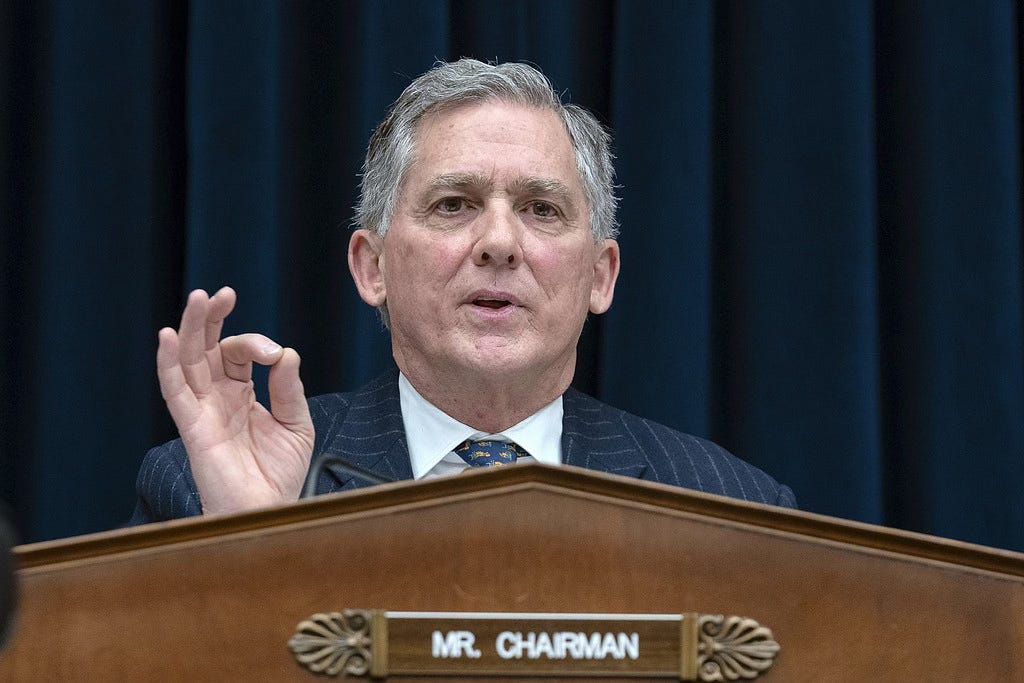
This morning, the House Financial Services Committee will take up the future of payments in a hearing expected to cover stablecoins, bank charters and the evolving role of digital assets in the U.S. financial system.
Ahead of the hearing, I caught up with Rachel Anderika, Anchorage Digital’s Head of Global Operations and one of the witnesses set to be in the hot seat alongside representatives from Stripe, the Bank Policy Institute, Davis Polk and the National Community Reinvestment Coalition.
While stablecoins and implementation of the GENIUS Act are likely top of mind for lawmakers, Anderika argues the more consequential debate may be about who gets access to the U.S. banking system as crypto companies increasingly seek federal charters.
“There are voices on both sides,” Anderika told me. “We’re going to be talking about stablecoins, how they’re regulated, and what they mean for innovation in payments. But we’re also going to be talking about chartering.”
The hearing comes amid growing tensions between traditional banking groups and crypto-native firms over access to national trust bank charters and the Federal Reserve's payment rails through master accounts. Banking trade groups have argued that crypto firms are seeking bank-like benefits without the same regulatory obligations imposed on traditional banks. Anderika rejects that characterization, arguing federally chartered trust banks remain subject to rigorous federal oversight and examination.
“A national trust bank is a national bank. Period. Full stop,” she said, noting that while trust banks cannot take deposits and make loans in the same way as traditional banks, they remain subject to federal supervision and examination.
At the heart of the debate is whether stablecoin issuers are fundamentally different from traditional banks.
Unlike traditional banks, which use customer deposits to extend credit, stablecoin issuers generally hold full reserves in cash and Treasuries, allowing users to redeem their holdings on demand. That distinction, Anderika argues, should be part of the conversation as lawmakers consider how payment innovation fits into the existing regulatory framework.
When it comes to competition, Anderika, herself a former bank examiner, pushed back on the notion that banks and crypto firms are headed for a winner-take-all showdown.
“I don’t really know a bank that’s not pursuing either a stablecoin strategy or a tokenized deposit strategy, or both,” she said.
That observation may end up being one of the most important themes of today’s hearing. While the public debate is often framed as banks versus crypto, many of the largest financial institutions are simultaneously exploring the same technologies crypto firms are building, making the question less about who wins and more about whether the two can coexist.
You can watch the hearing live at 10:00 a.m. ET here.
Remember: New editions of the Crypto In America newsletter drop every Monday and Wednesday.
If you like what you’re reading, don’t forget to subscribe!