
Welcome to the Monday edition of the Crypto In America newsletter!
What you'll read: Senate Majority Leader Thune wants to get a Clarity Act vote underway before the August recess. Will Republicans have the votes to finish it? Plus, SEC Commissioner Hester Peirce joins Crypto In America to discuss her latest warning on crypto vaults, what we're watching this week, and the weekend's top headlines.
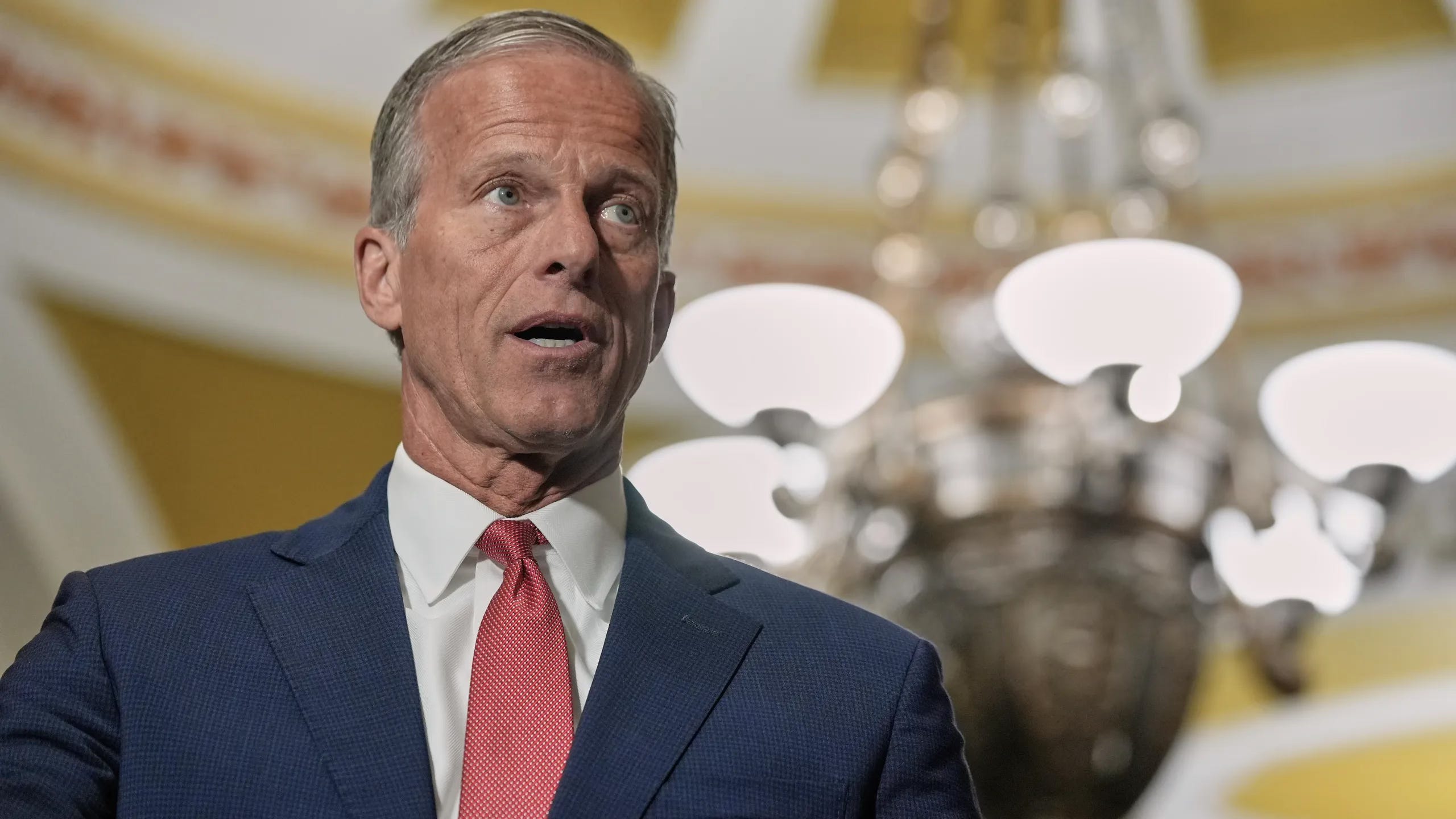
The crypto industry is hoping Senate Republicans can get the ball rolling this week on a floor vote for the Clarity Act.
That would begin with Senate Majority Leader John Thune (R-SD) filing cloture on the motion to proceed, setting up a vote (typically two session days later) that would require 60 votes to advance. If cloture is invoked, the Senate could then spend up to 30 hours debating the motion before voting on whether to proceed to the bill itself.
The problem: That timeline runs headfirst into the August recess, with senators scheduled to leave Washington on August 7.
The solution: Despite Thune saying last week that he did not think the Clarity Act could get done before the break, plugged-in crypto policy watchers say Senate leadership has discussed keeping members in town for the first few days of the recess to finish the job if the votes are there.
Whether they are is the bigger question. As of now, the bill likely does not have the 60 votes needed to advance, and Senate Republicans will spend this week working to shore up support on issues ranging from ethics to DeFi after seven key Democrats said the updated text “fell short” following its release last week.


Since then, Senator Thom Tillis (R-NC), who has called for stronger ethics provisions than those agreed to by the White House and his GOP colleagues, has been leading bipartisan talks aimed at finding a version of the proposal that Democrats can back.
Across-the-board Republican support isn't guaranteed either. With such a narrow margin and Senator Mitch McConnell (R-KY) expected to remain absent, the GOP has little room for defections. Senators Josh Hawley (R-MO) and Rand Paul (R-KY), both of whom voted against the GENIUS Act last year, remain question marks.
A notable endorsement: On Friday, the National Fraternal Order of Police, which had been engaged in discussions over the Blockchain Regulatory Certainty Act, endorsed the latest version of the Clarity Act. In a letter to Senate leaders, the group said it now believes the BRCA, which exempts certain non-custodial software developers from registering as money transmitters, does not limit law enforcement’s ability to investigate and prosecute crypto crimes, while also praising the bill’s broader law enforcement provisions.
It remains to be seen whether the endorsement will move the needle with Democrats such as Catherine Cortez Masto (D-NV) and Mark Warner (D-VA), both of whom have said their support depends on whether the bill adequately addresses law enforcement concerns.
Crypto Mom Says Some Vaults May Be Securities
SEC Commissioner Hester Peirce, affectionately known in the crypto industry as "Crypto Mom," is warning firms that putting a yield-generating product onchain doesn't automatically place it outside the SEC’s remit.
Speaking to Crypto In America on Friday, Peirce said crypto vaults, which pool users' assets to generate yield, could trigger securities laws depending on how they're structured. In some cases, she said, they could effectively function as onchain investment funds that must register or qualify for an exemption.
The key question is who is making the investment decisions. Peirce drew a distinction between traditional DeFi pools, where smart contracts execute transactions automatically, and curated vaults, where a person or entity actively decides how users' assets are invested.
“When you have a third party involved in deciding how different assets are being allocated and invested, that’s really a situation where you have to start asking: Do the securities laws apply?
Custody is one factor the SEC could consider, but Peirce said it isn’t necessarily the central issue. Active management of users’ assets, or issuing something that resembles a note, could also be enough to raise securities law questions.
Peirce, a longtime champion of software developers and onchain privacy, said the SEC isn’t looking to regulate developers simply for writing code, but moving a traditional financial activity onchain doesn’t entitle firms to a different rulebook.
“We don’t want to live in a world where, if you do something onchain, you get a different set of rules simply because you’ve decided to do it onchain,” she said, warning against “bad regulatory arbitrage.”
Her advice: Don’t assume you’re outside the SEC’s reach. Work with counsel, evaluate the services you’re actually providing, and engage with the agency early.
Peirce stopped short of promising formal guidance but said the SEC has had productive conversations with industry participants and remains open to exemptions where appropriate.
👀 What To Watch This Week

Monday
The Senate returns. The House begins recess.
Deadline to submit final comments on the Federal Reserve’s proposed “payment accounts,” also known as “skinny” master accounts.
Tuesday
10:00 a.m.: The Conference Board releases its Consumer Confidence Index for July.
Wednesday
SoFi (SOFI) reports earnings premarket. Robinhood (HOOD) and Riot Platforms (RIOT) report after the close.
9:15 a.m.: Day 1 of the Rare Evo conference kicks off in Las Vegas. Crypto In America will be on the ground.
2:00 p.m.: The Federal Open Market Committee meets to make its next interest rate decision, followed by a press conference with Federal Reserve Chair Kevin Warsh. Rates are expected to remain unchanged at 3.75%.
Thursday
Coinbase (COIN) and Strategy (MSTR) report earnings after the close.
8:30 a.m.: The Commerce Department releases its latest estimate of Q2 GDP and the Personal Consumption Expenditures (PCE) Price Index, the Fed’s preferred measure of inflation.
BitMEX says it will settle and delist 35 derivatives contracts as part of the exchange’s scheduled wind-down.
Friday
Trump Media & Technology Group (DJT) reports earnings after the close.
10:00 a.m.: The University of Michigan releases its final Consumer Sentiment Index for July.
Crypto compliance isn’t slowing teams down anymore. It’s becoming a growth lever.
Sumsub is the identity verification and compliance platform trusted by 4,000+ companies, including 8 of the 10 largest crypto exchanges.
Their free State of the Crypto Industry 2026 report covers how the industry has shifted into a regulated maturity era: smarter fraud, higher expectations, and a new playbook for teams that want to scale. Inside: how to balance friction and conversion, where Travel Rule gaps remain, and why verification is now a competitive edge, not a checkbox.
Data from 4M+ fraud attempts and 300+ crypto companies surveyed. See how your peers are adapting here.
Weekend News Flash

ICYMI: The biggest headlines from Friday and the weekend.
Crypto exchange BitMart said it will wind down its platform after nine years, sending its exchange token down nearly 60% following the announcement. The move comes after BitMEX announced last week that it would also shut down operations.
Strategy announced a $25 million buyback of its STRC preferred stock while selling approximately 5.4 million shares of MSTR common stock.
The National Fraternal Order of Police endorsed the Clarity Act, saying the amended text released last week addresses its previous concerns and preserves law enforcement’s ability to investigate crypto crimes.
The Digital Chamber, Blockchain Association and Crypto Council for Innovation sent a letter to Senate leaders urging them to bring the Clarity Act to the Senate floor.
The State Department launched the Freedom Tech Excellence Program with founding partners Bitcoin Policy Institute, Palantir and Anduril to advance diplomatic efforts around “digital freedom and freedom of expression.”
London-based fintech Wise plans to resubmit its application for a national trust bank charter under the GENIUS Act framework after the OCC denied its initial application.
Remember: New editions of the Crypto In America newsletter drop every Monday and Thursday.
If you like what you’re reading, don’t forget to subscribe!
I’ll take the under…
Let's not pass the Clarity Act! TRUMP will be happy to make another 1.5 billion next year. Stupid DUMOCRATS!