
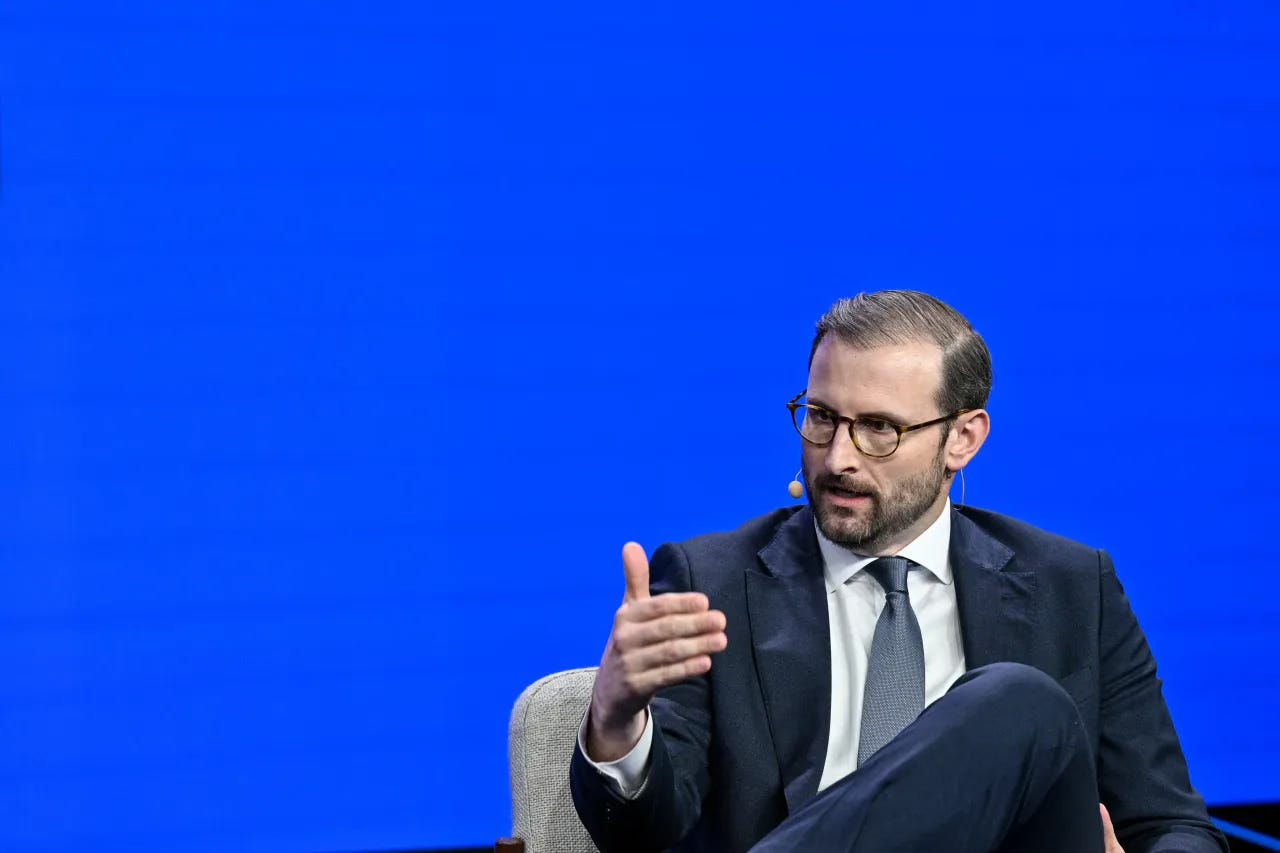
Patrick Witt, the White House's top crypto adviser, will begin a months-long leave of absence later this month to comply with orders requiring him to report for training with the Georgia Army National Guard, Crypto In America has learned.
Witt, 37, who worked at the Defense Department for two years before taking on his current role last August, is expected to wrap up his work at the White House next Friday before reporting for mandatory training in the Guard's Judge Advocate General, or JAG, program on July 27. Upon completion, he will qualify to serve as a JAG officer, a military attorney who provides legal counsel on matters ranging from military justice to operational and administrative law.
Witt and the White House did not immediately respond to requests for comment.
The move comes at a critical moment for the Clarity Act, the crypto industry's landmark market structure legislation that would establish a regulatory framework for digital assets, as Senate Republicans race to bring it to the floor before Congress leaves for its August recess, a deadline many crypto policy observers view as the last realistic opportunity to pass the bill this Congress.
Sources familiar with the matter say that while the timing of Witt's leave is not ideal, it was unavoidable. The Georgia native applied to the JAG program last spring as part of a longstanding ambition to serve before taking over as executive director following Bo Hines' departure to stablecoin giant Tether. After receiving orders to report for training, Witt postponed the start of the program, originally scheduled for April, so he could remain at the White House as Clarity Act negotiations stretched on longer than expected. A second postponement was not an option.
Even so, the White House will be without its chief negotiator as the legislation enters a pivotal phase.
As executive director, Witt served as the administration’s top liaison on the bill, leading months of talks with lawmakers and industry stakeholders over some of its most contentious issues. Those efforts included helping broker a compromise between the crypto industry and banks over stablecoin yield, navigating partisan disputes over ethics provisions, and securing the support of law enforcement groups concerned the bill could make it harder to investigate and prosecute illicit activity.
His looming departure raises the stakes for the next two weeks as lawmakers and the White House work to resolve the Clarity Act's remaining sticking points, particularly negotiations over ethics provisions aimed at addressing President Trump's crypto business interests after financial disclosures showed he earned more than $1 billion from crypto-related ventures last year.
In Witt's absence, the crypto council's deputy director, Harry Jung, is expected to assume his responsibilities, though Witt intends to remain as involved as possible during his military training, according to sources familiar with the plans. The transition is expected to provide a measure of continuity because Jung has worked alongside Witt over the past year and been in the room for many of the same negotiations. Still, it comes at a particularly delicate moment for legislation that still faces significant political hurdles.
It remains unclear whether Witt intends to return to the role full time after completing his training.
Beyond his work on the Clarity Act, Witt has also led the administration's efforts to implement the Strategic Bitcoin Reserve and has been a leading voice on a range of other crypto policy priorities, including implementation of the GENIUS Act and efforts to modernize the tax treatment of digital assets.
The August-recess deadline is what makes this sting. Losing your chief negotiator in the final two weeks, even with Jung stepping in, is a real continuity risk when the unresolved piece is the ethics provisions tied to Trump's own crypto income. Witt brokering the stablecoin-yield compromise showed how much ran through one person. Handing that off mid-stretch is what decides whether Clarity moves this Congress or slips.
Bravo pour l article de Paris France👍