

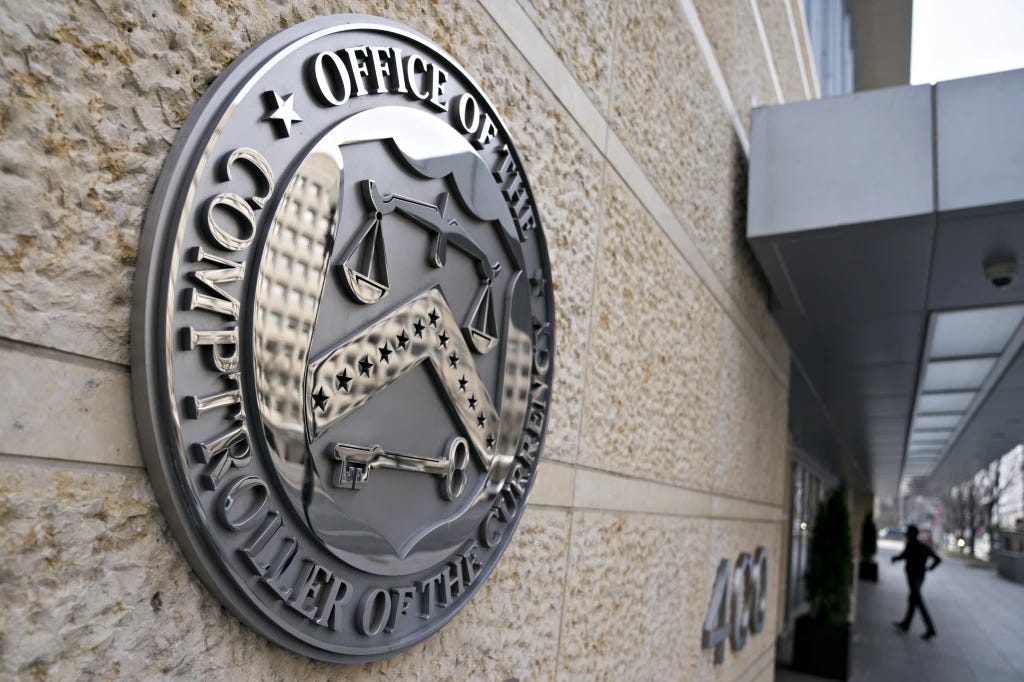
The Office of the Comptroller of the Currency has finalized its long-awaited GENIUS Act rules, backing away from proposed restrictions on stablecoin rewards and giving issuers more flexibility in managing their reserves.
The more than 700-page rule sets federal standards for stablecoin issuers covering everything from reserve backing and redemptions to capital, custody and risk management.
The OCC is the first federal banking regulator to finalize its core GENIUS Act rules, getting ahead of the Federal Reserve and FDIC, which have issued their own proposals. The Treasury Department is also working on separate regulations.
Stablecoin “Loophole” Left Open
In one of the biggest changes from its original proposal, the OCC dropped a provision that would have treated certain arrangements between stablecoin issuers and third parties as presumed violations of the GENIUS Act’s ban on interest and yield.
The decision leaves unresolved one of the biggest sticking points in negotiations over the Clarity Act: whether crypto exchanges and other third parties should be allowed to offer rewards on stablecoin balances.
The GENIUS Act bans stablecoin issuers from paying interest or yield to holders, but doesn’t explicitly ban crypto exchanges and other third parties from offering rewards. Banking groups have called this the “stablecoin loophole” and lobbied hard to close it.
Instead of presuming certain arrangements violate the law unless issuers can prove otherwise, the OCC will review them case by case and take enforcement action against violations or attempts to get around the ban.
“We will just let the market develop and address it as it comes,” an OCC official told reporters, adding that the agency may issue further guidance as the market evolves.
The official declined to say whether existing exchange rewards programs comply with the rule. The OCC also rejected calls to exempt rewards programs that predated the GENIUS Act.
Why it matters: Stablecoin yield was a red line for banks during negotiations over the Clarity Act, the crypto industry’s marquee market structure legislation. Banks pushed to restrict rewards on stablecoins held in accounts rather than used for transactions, warning that such payments could drain deposits and hurt lending.
After the bill failed in the Senate in September, banks looked to the OCC for tighter restrictions. Brooke Ybarra, senior vice president at the American Bankers Association, confirmed in a recent Crypto in America interview that the industry was relying on the OCC’s rulemaking.
But the final rule stops short of closing the loophole, leaving one of the biggest fights between banks and the crypto industry unresolved.
“This is why the banks should have supported the Clarity Act,” said a crypto industry source who requested anonymity. “They would have gotten more restrictions, which they don’t have now.”
More Flexibility for Stablecoin Issuers
Beyond stablecoin rewards, the OCC eased several proposed restrictions on how issuers manage their reserves.
The final rule scraps a proposed 20-day weighted-average maturity limit on reserve assets, giving issuers more flexibility to hold longer-dated eligible investments, including U.S. Treasuries.

Under the new rules, issuers will be able to withdraw surplus reserves at any time, rather than once a month, provided they maintain enough assets to back outstanding stablecoins. The OCC eased certain limits on how much issuers can hold with individual counterparties, while retaining safeguards designed to limit risk.
On redemptions, the agency removed a proposed provision that would have automatically extended redemption deadlines during a surge in withdrawal requests. Instead, issuers must notify the OCC within 24 hours if redemption requests exceed 10% of the outstanding value of any stablecoin they issue within a 24-hour period.
Issuers must still maintain reserves backing their outstanding stablecoins at least one-to-one, meet liquidity requirements and comply with counterparty exposure limits and stress-testing obligations.
The final rule also establishes a federal licensing and supervisory framework for eligible stablecoin issuers, including financial companies that aren’t banks, certain bank subsidiaries and foreign issuers operating under OCC jurisdiction.
“We are providing a clear, practical framework for payment stablecoin innovation, with strong standards for reserve backing, redemption, and risk management,” Comptroller Jonathan Gould said in a statement.
What’s Next?
The final rule takes effect on January 18, 2027, but the OCC has yet to announce when it will begin accepting applications from prospective stablecoin issuers.
Rules covering anti-money laundering and sanctions compliance are still to come, with the OCC and Treasury working on a separate proposal.