
Welcome to the Monday edition of the Crypto In America newsletter!
⚽️ First things first: Congratulations to Spain on winning the World Cup! It made the sting of England’s last-minute semifinal loss to Argentina a little less painful. A great summer of “football” all around, nonetheless.
What you’ll read: It’s coming down to the wire for the Clarity Act as the White House has yet to sign off on ethics provisions and industry stakeholders await updated legislative text. Plus, what’s on tap this week and the top stories you need to start the day.
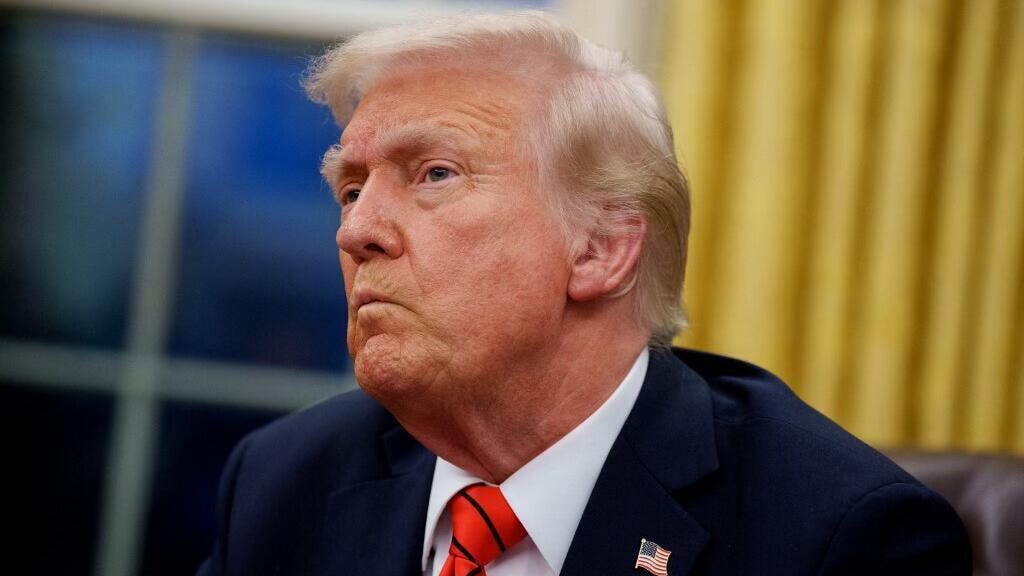
The third week of July is upon us and there are still no signs that the Clarity Act is ready to come to the Senate floor.
Much to the chagrin of the crypto industry, no date has been set for a vote, updated legislative text has yet to be released, and negotiations over the bill’s most contentious issues remain ongoing, with only 14 working days left before senators depart Washington for the August recess.
Ethics continues to be the elephant in the room, and finding a viable solution that Democrats, as well as some Republicans, can support will likely determine whether the Clarity Act sees floor time this month.
But Democrats say they have been left largely in the dark about ethics discussions in recent weeks, including a White House meeting last Thursday afternoon aimed at securing the president’s support for provisions designed to prevent government officials from profiting from digital assets.
President Trump met privately in the Oval Office with White House Chief of Staff Susie Wiles, White House Counsel David Warrington, Crypto Council Executive Director Patrick Witt, Acting Attorney General Todd Blanche and Republican Senators Cynthia Lummis (R-WY) and Bernie Moreno (R-OH).
While it remains unclear what was discussed or what, if anything, the president agreed to, sources familiar with the negotiations tell Crypto In America that, as of this morning, the White House still had not made clear what ethics parameters it would support, potentially further delaying Republicans’ release of an updated version of the bill.
Without new text, the industry, too, has been left guessing about changes made over the past two months to key provisions, including the fate of the Blockchain Regulatory Certainty Act (BRCA), as well as language in the Senate Agriculture Committee’s portion of the bill addressing conflicts of interest arising from crypto exchanges’ vertical integration, affiliate trading and the preemption of state law.
“I think the BRCA will remain intact, and I think the Banking piece is probably not going to change when the bill comes out,” Blockchain Association CEO Summer Mersinger told Crypto In America. “They’re still negotiating text in the Agriculture Committee. They made it sound like they were down to technical edits at this point.”
One potential complication for the BRCA is public opposition from the National Sheriffs’ Association, which released a video last week calling cryptocurrency “the cartel currency of choice” and arguing that the Clarity Act would facilitate criminal activity and make law enforcement’s job much harder, a narrative that proponents of the bill, including the White House and Acting Attorney General Blanche, have spent months trying to counter.
It’s unclear what this will mean for efforts to secure the votes of Senators Catherine Cortez Masto (D-NV) and Mark Warner (D-VA), who have signaled that their support could hinge on whether concerns raised by law enforcement and the Department of Justice about illicit finance are addressed in the final bill.
“I want America to lead in digital assets, but if we get it wrong, the downside ramifications could be huge as well,” Warner said during a Senate Finance Committee hearing last week.
Industry leaders are still holding out hope for a vote on the Clarity Act as early as this week, though the volume of unresolved issues makes that highly unlikely. The prevailing view on Capitol Hill is that negotiators have until the end of this week to tee up a cloture vote on the motion to proceed, which would require 60 votes to advance the bill to the Senate floor.
If the Clarity Act does not reach the floor next week, the window for passage before the August recess will effectively close.
👀 What To Watch This Week

Monday
The House and Senate return.
Tuesday
10:00 a.m.: Day One of the Out East Summit kicks off on Long Island’s North Fork. The invitation-only conference brings together leaders in institutional digital assets. Crypto In America will be on the ground.
The House Financial Services Committee hosts an oversight hearing of FinCEN.
Wednesday
CME Group (CME) and Nasdaq (NDAQ) report earnings before the market opens.
12:30 p.m.: The Center for American Progress will host Senator Chris Murphy (D-CT) for a panel titled “Stopping Trump’s Crypto Corruption,” focused on “the risks of the Clarity Act to democracy and national security.”
Tesla (TSLA) and Alphabet (GOOGL) report earnings post-market.
Thursday
10:00 a.m.: The Senate Banking Committee will hold a confirmation hearing for three Trump administration nominees, including Brian Johnson, the president’s pick to lead the Consumer Financial Protection Bureau.
Friday
Deadline to submit comments on the OCC’s proposed GENIUS Act rules, which would apply anti-money-laundering and sanctions compliance standards to supervised stablecoin issuers.
Robinhood Has 27 Million Accounts. Now It Wants to Bring Them Onchain | Johann Kerbrat
ICYMI: Last week on the podcast, we sat down with Johann Kerbrat, Robinhood’s Senior Vice President and General Manager of Crypto and International, to discuss the company’s push to bring its 27 million accounts onchain.
We dug into the early activity on Robinhood Chain, with memecoins leading the way, the firm’s expansion into tokenization and DeFi, and what could happen if Congress fails to pass the Clarity Act.
Catch the full episode on all platforms here.
Crypto compliance isn’t slowing teams down anymore. It’s becoming a growth lever.
Sumsub is the identity verification and compliance platform trusted by 4,000+ companies, including 8 of the 10 largest crypto exchanges.
Their free State of the Crypto Industry 2026 report covers how the industry has shifted into a regulated maturity era: smarter fraud, higher expectations, and a new playbook for teams that want to scale. Inside: how to balance friction and conversion, where Travel Rule gaps remain, and why verification is now a competitive edge, not a checkbox.
Data from 4M+ fraud attempts and 300+ crypto companies surveyed. See how your peers are adapting here.
Weekend News Flash

ICYMI: The biggest headlines from Friday and the weekend.
U.S. regulators, including the Treasury Department, OCC, FDIC and Federal Reserve, missed the GENIUS Act’s one-year deadline on Saturday to finalize rules for stablecoin issuers.
Rapper Drake lost a $1.5 million USDT bet after backing Argentina to beat Spain in regulation in the World Cup final. The wager would have paid out more than $5 million.
The Senate unanimously passed a resolution stating that convicted FTX founder Sam Bankman-Fried should not receive a presidential pardon.
JPMorgan tokenized shares of the Invesco QQQ Trust, creating a blockchain-based representation of the ETF.
Stripe and Advent International have offered more than $53 billion to acquire PayPal, but the company’s board considers the bid inadequate, according to Reuters.
Morgan Stanley’s E*TRADE completed its rollout of spot trading for Bitcoin, Ethereum and Solana through its partnership with Zerohash.
Ken Griffin’s Citadel Securities invested $400 million in Crypto.com at a $20 billion valuation, marking the exchange’s first institutional funding round.
The SEC proposed making electronic delivery the default method for issuers, broker-dealers, investment advisers and other market intermediaries to provide required regulatory information.
T. Rowe Price launched its Active Crypto ETF ($TKNZ), offering actively managed exposure to Bitcoin, Ethereum, Solana and Hyperliquid.
Visa launched a stablecoin platform that allows banks, fintechs and crypto firms to mint, move and manage digital dollars across its network of more than 200 million merchants.
Remember: New editions of the Crypto In America newsletter drop every Monday and Thursday.
If you like what you’re reading, don’t forget to subscribe!
The thing is, the crypto industry is still going to continue, with or without regulation and clarity from Congress. Holding the CLARITY Act up only serves to weaken the United States' ability to influence and lead globally on how the crypto industry will impact global finance. Ethics will always be evolving, and there are always going to be people who are going to find loopholes to exploit ethics laws to enrich themselves. Passing the CLARITY Act now is the most responsible way forward.