
Welcome to the Friday edition of the Crypto In America newsletter!
What you’ll read: Highlights from a crypto-heavy week on Capitol Hill and this week’s top headlines.

It was a busy few days for crypto policy in D.C.
The week kicked off with lawmakers, regulators, and administration officials at the Blockchain Association’s Policy Summit and wrapped with industry leaders meeting at the White House to discuss outstanding market structure issues, book-ended by notable developments from both the CFTC and SEC.
Here’s a roundup of the week’s key events:
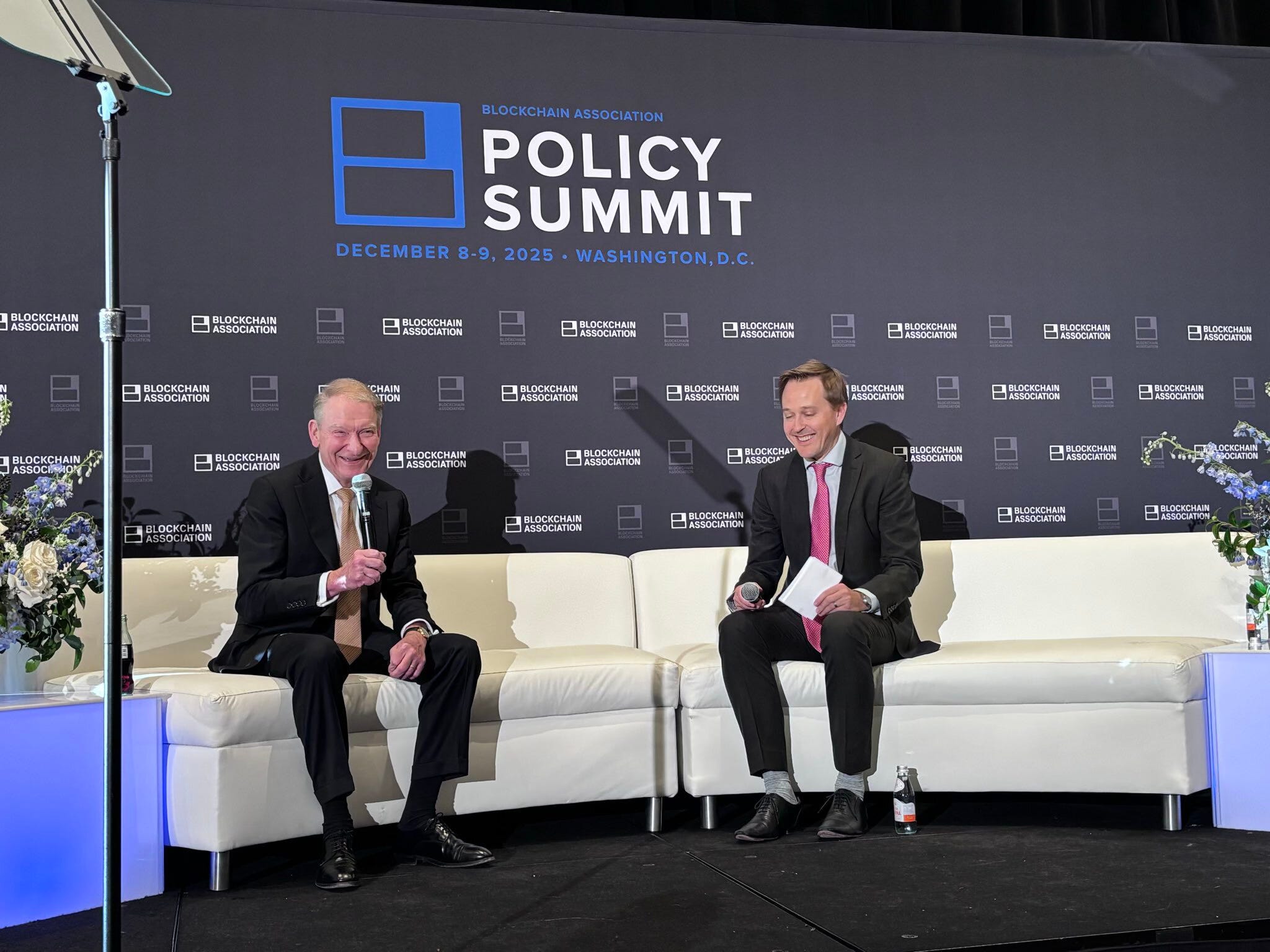
At the BA Policy Summit, SEC Chair Paul Atkins told a16z’s Miles Jennings that most crypto assets are not securities, but schemes in which tokens are sold to raise capital and tied to managerial promises could be. Importantly, he added that such tokens may later be resold under certain conditions without implicating securities laws. Atkins also emphasized the importance of bringing capital markets on-chain and said he looks forward to exploring an innovation exemption for firms to help make that possible.
Over at the CFTC, Acting Chair Caroline Pham was on a roll. She launched a pilot program allowing BTC, ETH, and USDC as collateral in U.S. derivatives markets and is exploring tokenized assets like Treasuries and money market funds for the same purpose. Pham also announced plans to rescind the 2020 guidance on digital asset “actual delivery” in retail transactions to align with current crypto regulations. Plus, she named twelve CEOs to the new CFTC CEO Innovation Council, a forum tasked with tackling market structure issues in derivatives markets. The OCC also clarified that banks can conduct ‘riskless principal’ crypto transactions, effectively serving as brokers rather than holding crypto themselves.
We got a glimpse into the negotiation process between Senate Banking Committee Republican and Democratic staffers after a leaked three-page compromise proposal from Republicans outlining what they were willing to accept in a market structure draft in exchange for some of their own priorities. A Democratic counter-offer was also leaked, with Democrats arguing that the Republican proposal still missed key principles and detailing their own asks on token classification, illicit finance, ethics, and the GENIUS Act’s stablecoin yield restrictions.
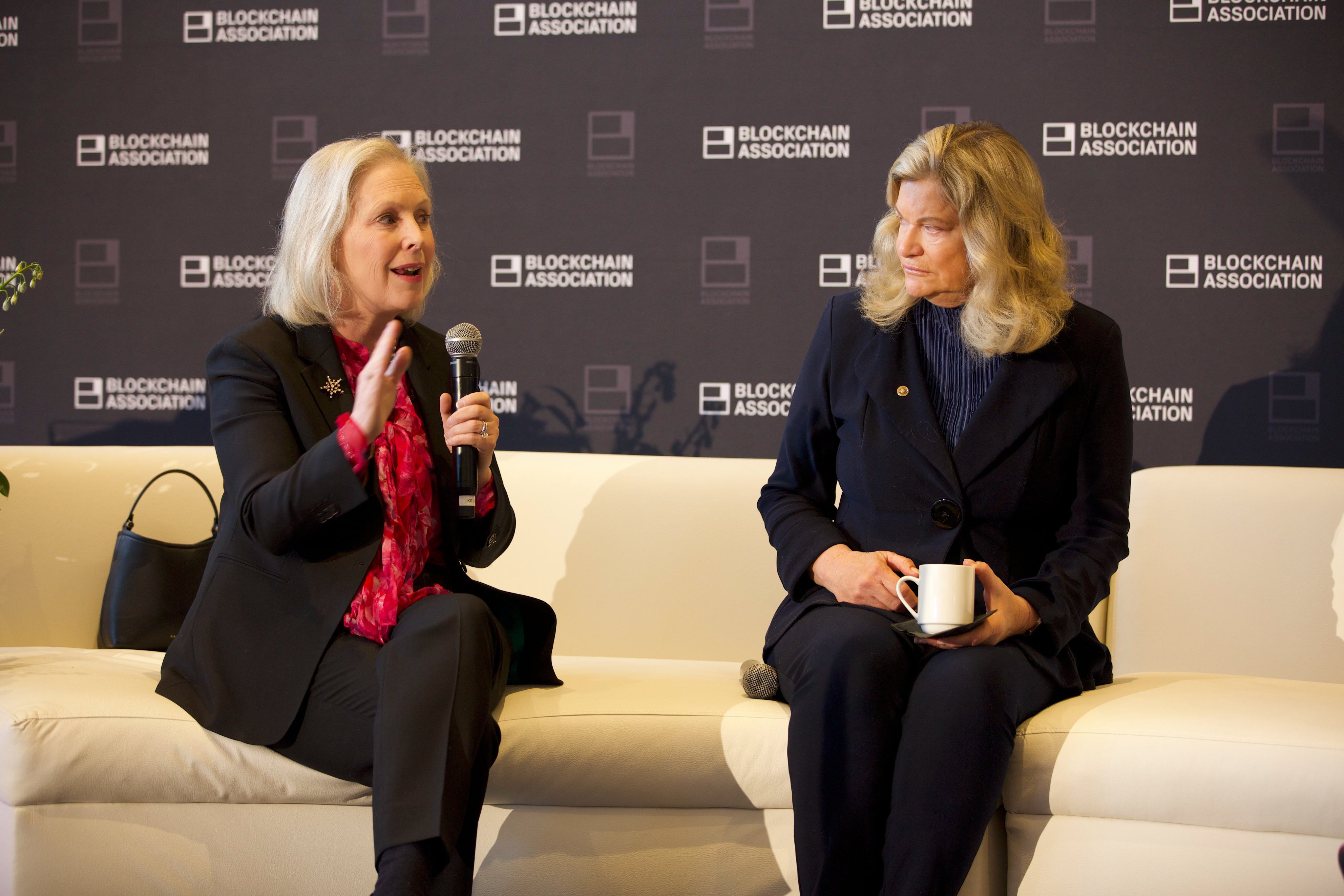
More than a dozen pro-crypto members of Congress attended the BA Summit and shared their thoughts on the market structure process. Several noted that while progress had been slow, discussions were moving forward, with Kirsten Gillibrand (D-NY) saying, “Nothing is holding up this bill.”
About 20 industry representatives from across the crypto sector met at the White House on Thursday afternoon for a two-hour discussion on outstanding market structure issues. Attendees who spoke with Crypto In America described the meeting as “productive.”
Later that day, CEOs from Bank of America, Citi, and Wells Fargo met with Senate Banking Committee members to outline their priorities for the market structure bill, including stablecoin yield, AML concerns, and other key issues. Banking Committee Chair Tim Scott (R-SC) said after the meeting that “real progress” is being made toward passing a bill and that he and his colleagues have received “valuable feedback from across the banking and crypto industries.”
Looking ahead to next week: The big question is whether we’ll see a markup of the latest market structure text before lawmakers head home for the holidays. Because the Senate must provide at least three days’ notice before a markup and Senators are scheduled to leave Thursday, it seems all but certain that the markup will be pushed to January when Congress returns. That said, it’s still possible the Banking Committee could release some form of text that the industry will have time to digest over the break.
A bright spot: The Senate advanced CFTC Chair nominee Mike Selig and several other nominees, including FDIC Chair Travis Hill. If all goes smoothly, both could be confirmed next week.

Invest as you spend with the Gemini Credit Card®. Get approved to earn $200 in Bitcoin. Issued by WebBank. Terms apply.
In Other News

ICYMI. Here are the biggest news stories this week from the intersection of Washington and Web3:
Terraform Labs founder Do Kwon received a 15-year prison sentence for fraud tied to the $40 billion collapse of $UST and $LUNA in 2022.
The CFTC launched a pilot program allowing BTC, ETH, and USDC as collateral in U.S. derivatives markets and is examining tokenized assets like Treasuries and money market funds for the same purpose.
The CFTC said it will rescind its 2020 guidance on “actual delivery” of digital assets in retail transactions to reflect current crypto regulations.
JPMorgan issued the first-ever commercial paper for Galaxy Digital on Solana, marking one of the earliest instances of debt issuance on a public blockchain.
The SEC closed its two-year investigation into tokenization firm Ondo Finance without recommending any charges.
The SEC issued a no-action letter allowing a DTCC subsidiary to tokenize major U.S. securities including stocks, bonds, ETFs, and indexes.
The OCC confirmed that banks can engage in “riskless principal” crypto trades, buying from one client and selling to another without holding the assets, essentially functioning as brokers.
The OCC found that nine major U.S. banks inappropriately debanked crypto firms and politically controversial industries between 2020 and 2023.
Senator Jerry Moran (R‑KS) and Elissa Slotkin (D‑MI) introduced a bipartisan bill to establish a task force for recognizing and averting crypto scams.
The Federal Reserve cut interest rates by 25 basis points, with Chair Powell saying the central bank is now in a “wait-and-see” mode before deciding on further rate moves.
PNC Bank announced a partnership with Coinbase to offer direct Bitcoin trading for its private clients.
Gemini received a CFTC DCM license, allowing it to launch prediction markets for U.S. customers.
Crypto asset manager Bitwise launched the Bitwise 10 Crypto Index ETF on NYSE Arca, giving investors exposure to a basket of the ten largest digital assets.
Bitcoin treasury firm Twenty One Capital began trading on the NYSE under the ticker XXI.
Remember, new editions of the Crypto In America newsletter drop every Monday, Wednesday and Friday at 7AM EST.
If you like what you’re reading, don’t forget to subscribe!
This week in U.S. crypto policy saw significant momentum: SEC leadership signaled that most tokens aren’t securities under current law, while the CFTC advanced pilot programs for BTC, ETH, and USDC as derivatives collateral. Regulators and lawmakers at the Blockchain Association Policy Summit discussed market structure progress. Banks gained clarity on crypto trading roles, new licenses were granted, and bipartisan efforts targeted scams
This is a solid roundup. Crypto policy isn’t just a regulatory conversation anymore, it directly shapes security posture, custody models, and how capital moves across decentralized systems. Clarity tends to reduce systemic risk, while uncertainty expands both innovation and attack surfaces.
From a blockchain security perspective, teams that anticipate policy shifts and build with resilience in mind will be better positioned long term. Appreciate the balanced take here.
solo.to/0xObsidianEnoch