
Welcome to the Wednesday edition of the Crypto In America newsletter!
What you’ll read: Crypto emerged a winner after spending millions in the Texas primary runoffs; President Trump wades into the prediction markets debate; Senator Elizabeth Warren sparks backlash for criticizing crypto trust charter approvals; Scott Shay from N3XT joins the podcast; and other stories making headlines this week.

Crypto went 6-for-6 backing winning candidates in the Texas primary runoffs Tuesday night, potentially proving the $2.5 trillion industry’s political influence is still alive and well in U.S. politics.
The industry’s leading super PAC, Fairshake, took credit for helping 38-year-old freshman Rep. Christian Menefee unseat 20-year incumbent Rep. Al Green, 78, in the Democratic primary runoff for Texas’s 18th Congressional District after spending roughly $6.5 million on the race, largely on ads backing Menefee.
“Rep. Green’s defeat proves that anti-crypto hostility carries real electoral consequences, making him the first Democratic incumbent this cycle to lose his seat,” spokesman Geoff Vetter said. “Fairshake was the difference-maker in this race, and we will continue to aggressively back leaders like Rep. Menefee across the country.”
Green, 78, who received an “F” rating from advocacy group Stand With Crypto for voting against pro-crypto legislation like the GENIUS and Clarity Acts, received just 31% of the vote.
Elsewhere, candidates Alex Mealer (TX-09), Tom Sell (TX-19), John Bonck (TX-38), and Carlos De La Cruz (TX-35) all won their respective races after receiving a combined $1.8 million in backing from Fairshake.
The Blockchain Leadership Fund, backed by Anchorage and Chainlink, also endorsed Menefee and Bonck with direct donations to their campaigns, though the PAC has yet to disclose individual expenditure amounts for each candidate.
Attorney General Ken Paxton’s upset win over Sen. John Cornyn in the Republican Senate primary runoff had some crypto money behind it as well.
Fellowship PAC, which received a $10 million contribution from Cantor Fitzgerald and is chaired by a Tether executive, reported spending $500,000 on ads supporting Paxton last week. The spending followed President Trump’s endorsement of Paxton and came after the PAC suspended a planned $1.75 million ad buy for him in April.
Races To Watch
With Texas now in the rearview, Fairshake’s next target appears to be Maryland, where state lawmaker Adrian Boafo is running in the June Democratic primary for the state’s 5th Congressional District. The super PAC has spent roughly $2.12 million backing Boafo so far.
Next week, the crypto industry will be eyeing California’s top-two primary in the state’s 32nd Congressional District, where longtime crypto critic Rep. Brad Sherman faces former Biden White House official Jake Levine in a race to advance to November’s general election.


Sherman’s campaign has been sending out mailers warning about the “dishonest” and “dark underworld” of cryptocurrency, echoing the anti-crypto messaging used by candidates targeted by Fairshake and other crypto PACs in 2024.
Despite Sherman’s rhetoric, no major crypto PAC funds have been deployed in the race yet. It’s possible outside groups are waiting to see whether Sherman advances out of the top-two primary before committing money to the general election.
Trump Backs CFTC in Prediction Market Fight
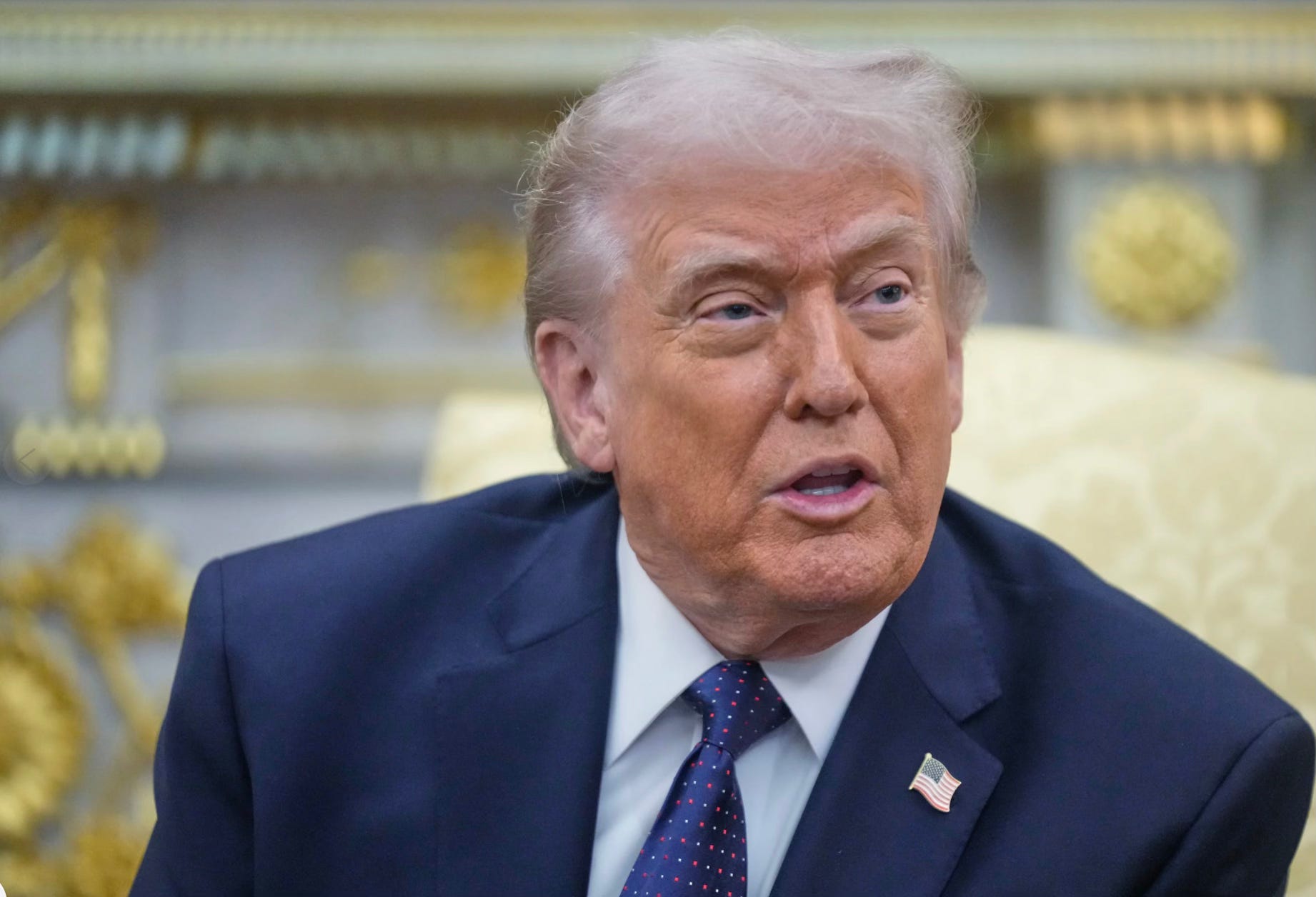
President Trump endorsed the CFTC’s push for federal preemption of prediction markets, calling it “critically important” that the agency maintain exclusive authority over them.
In a Truth Social post Tuesday, Trump said his administration is setting the “gold standard” for states, while criticizing state officials who have recently opposed the CFTC’s effort to claim exclusive jurisdiction over what the agency views as an innovative financial technology, but what many states argue are effectively traditional gambling operations.
“We cannot have SCUM like Chris Christie, Letitia James, Tim Walz, and JB Pritzker setting the rules!” he wrote. “Other Countries are after this new form of Financial Market, and we want to remain at the top.”


The issue is currently being litigated in several federal district courts, with both the CFTC and a handful of states suing over who has the authority to regulate prediction markets. Many legal experts believe the dispute will eventually end up before the U.S. Supreme Court.
In the same post, Trump also gave a nod to his pick for CFTC Chair, Michael Selig, who assumed the role at the end of last year. His comments come on the heels of a New York Times article alleging the CFTC has allowed crypto and prediction markets to reign supreme and “steamroll[]” regulators, in part due to Trump’s financial interests in both industries.
Those ties include Donald Trump Jr. serving as an adviser to Kalshi and investing in Polymarket through the venture capital firm 1789 Capital, as well as Trump Media & Technology Group, the parent company of Truth Social, announcing plans to offer prediction markets through a partnership with Crypto.com.
Crypto compliance isn’t slowing teams down anymore. It’s becoming a growth lever.
Sumsub is the identity verification and compliance platform trusted by 4,000+ companies, including 8 of the 10 largest crypto exchanges.
Their free State of the Crypto Industry 2026 report covers how the industry has shifted into a regulated maturity era: smarter fraud, higher expectations, and a new playbook for teams that want to scale. Inside: how to balance friction and conversion, where Travel Rule gaps remain, and why verification is now a competitive edge, not a checkbox.
Data from 4M+ fraud attempts and 300+ crypto companies surveyed. See how your peers are adapting here.
Scott Shay: Crypto and Traditional Banking Are Fundamentally Incompatible
This week on the podcast, we sit down with Scott Shay, founder of narrow bank N3XT and founder and former chairman of Signature Bank, who explains why he believes crypto and traditional banking are fundamentally incompatible systems and why Wall Street may be moving too fast in adopting digital assets.
Shay takes us on a deep dive into fractional vs. full reserve banking, stablecoins, and Fed master accounts, and why he believes crypto rails will eventually force a complete rethink of the modern banking system.
He also shares his perspective on the fall of Signature Bank, Operation Choke Point 2.0, and why he says the government ultimately “shredded” Signet, the internal crypto payments network he helped pioneer.
Watch this episode on all platforms here.
OCC Crypto Trust Charter Approvals Back in the Spotlight
Just days after the Senate Banking Committee handed the crypto industry a major win by advancing a landmark market structure bill, the committee’s top Democrat was back to warning that the industry is receiving special treatment from regulators and sidestepping existing banking laws.
Senator Elizabeth Warren (D-MA) sent a letter to OCC Comptroller Jonathan Gould on May 18 questioning the legality of the OCC’s recent national trust charter approvals for several “seemingly ineligible” crypto firms, including Coinbase, Ripple, BitGo and Paxos, arguing the companies appear to be using the charters to engage in broader banking activities without being subject to the same safeguards and oversight as full-service banks.
Since December, the OCC has granted conditional or full trust charter approvals to at least eight crypto firms, drawing backlash from banking trade groups like the Bank Policy Institute, which warned the move could “significantly increase risks to the U.S. financial system.”
“Your decision to facilitate this regulatory arbitrage not only conflicts with federal law, it also poses serious risks to consumers, the safety and soundness of the banking system, and the separation of banking and commerce,” Warren wrote.
While Gould has not yet officially responded to Warren’s letter, an OCC spokesperson pointed Crypto In America to a February tweet in which Gould defended the charter application process, saying applications are evaluated under capital, compliance and safety and soundness standards in the Comptroller’s Licensing Manual.

Warren’s claims that the crypto firms were improperly granted national trust charters drew swift pushback from crypto trade association The Digital Chamber, which sent its own letter to Gould defending the approvals.
"The characterization of these approvals as 'apparent violations' of the National Bank Act misreads both the statute and the OCC's longstanding charter authority," said TDC CEO Cody Carbone in the letter.
In an open letter to Warren, BitGo CEO Mike Belshe argued that the firm should not be treated like a traditional bank because it does not take deposits or lend out customer funds, but instead operates as a regulated custodian safeguarding customer crypto assets, which, he says, is the exact type of business national trust charters were designed for.
Midweek Recap

ICYMI: Here are some of the biggest stories making headlines this week.
Mastercard said it secured a BitLicense from the New York Department of Financial Services, allowing it to offer crypto services in New York State.
Senator Mike Crapo (R-ID) joined Sens. Elissa Slotkin (D-MI) and Jerry Moran (R-KS) in cosponsoring the SAFE Crypto Act, a bill introduced in December aimed at strengthening coordination between federal agencies, law enforcement, and the crypto industry to combat cryptocurrency scams and fraud.
Ondo Finance said the company’s president, Ian De Bode, will become CEO following the unexpected death of founder and CEO Nathan Allman.
SoFi became the first full-service U.S. national bank to offer a stablecoin running on public blockchain rails directly to customers, allowing users to buy, sell, and hold SoFiUSD inside the SoFi app.
The S&P 500 and the Nasdaq closed at new all-time highs as Micron (MU) led a big rally in chips with gains of 19%.
Gallup’s Economic Confidence Index fell to -45 in May, its lowest level since October 2022, with 76% of Americans saying economic conditions are worsening.
DTCC announced plans to enable DTC tokenized assets on the Stellar network, with the integration expected to go live in the first half of 2027.
Tom Lee’s Ethereum treasury company BitMine increased its holdings to 5.39 million ETH, worth roughly $11 billion and equal to about 4.47% of Ethereum’s total supply.
SEC Chair Paul Atkins said he would be open to loosening decades-old rules that restrict certain public communications by companies during the IPO process in an effort to encourage more firms to go public.
Ethereum treasury firm SharpLink Gaming and Solana treasury firm Forward Industries will join the Russell 2000 and Russell 3000 indexes on June 29.
Remember: New editions of the Crypto In America newsletter drop every Monday and Wednesday.
If you like what you’re reading, don’t forget to subscribe!
Texas was the test case and they passed. Worth flagging that Fairshake's 2024 win ratio still holds. Pro-crypto candidates basically can't lose a primary or runoff when the PAC engages, and this Texas data strengthens the pattern. The interesting question is which 2026 House incumbents start hedging once the donor list goes public.