
Welcome to a Thursday edition of the Crypto In America newsletter!
What you'll read: The latest push to bring the Clarity Act to the Senate floor; Governor JB Pritzker signs a controversial crypto tax into law in Illinois; Rep. Dusty Johnson joins the podcast; and a roundup of the week's top stories.

With just over a week remaining before the Senate leaves for the July 4 recess, pro-crypto senators and administration officials are continuing behind-the-scenes negotiations to position the Clarity Act for a floor vote when lawmakers return.
According to sources familiar with the proceedings, a bipartisan group of senators from the Banking and Agriculture Committees is expected to meet this morning to discuss outstanding issues. Later today, Acting Attorney General Todd Blanche is scheduled to meet with law enforcement groups as the administration continues its push to build support for the Blockchain Regulatory Certainty Act, a key yet controversial provision of the bill.
The measure would clarify that certain non-custodial software developers are not liable for how third parties use their code unless they knowingly intended it to facilitate illicit activity, something law enforcement officials worry could hamper their ability to pursue bad actors operating onchain. As Crypto In America has reported, law enforcement buy-in could prove critical to securing the support of several Democratic senators who have made clear they want those concerns addressed before backing the legislation.
Meanwhile, industry advocates are keeping the pressure on from the outside. On Wednesday, Stand With Crypto organized a Capitol Hill "fly-in" that brought advocates from more than a dozen states to meet with 18 Senate offices and push for final passage of the Clarity Act. The Digital Chamber is expected to host a similar lobbying day on Tuesday.
“The urgency to act on Clarity is increasing as the legislative calendar shrinks,” said Digital Chamber CEO Cody Carbone. “Our fly-in next week is timed to bring the world’s leading founders, builders, and innovators to DC to make the case for why the U.S. should lead on crypto and pass Clarity now.”
The advocacy push comes as lawmakers race to resolve outstanding issues amid growing concerns that the bill's prospects could diminish significantly once Congress turns its attention to the midterm elections.
“We have got to close this out before August otherwise that door will shut for far too long,” Rep. Dusty Johnson (R-SD), chairman of the House Agriculture Committee’s Digital Assets Subcommittee, told Crypto In America. “We cannot count on the lame duck session to do it.”
'A Tollbooth on the Internet': Illinois Signs First-of-Its-Kind Crypto Tax Into Law
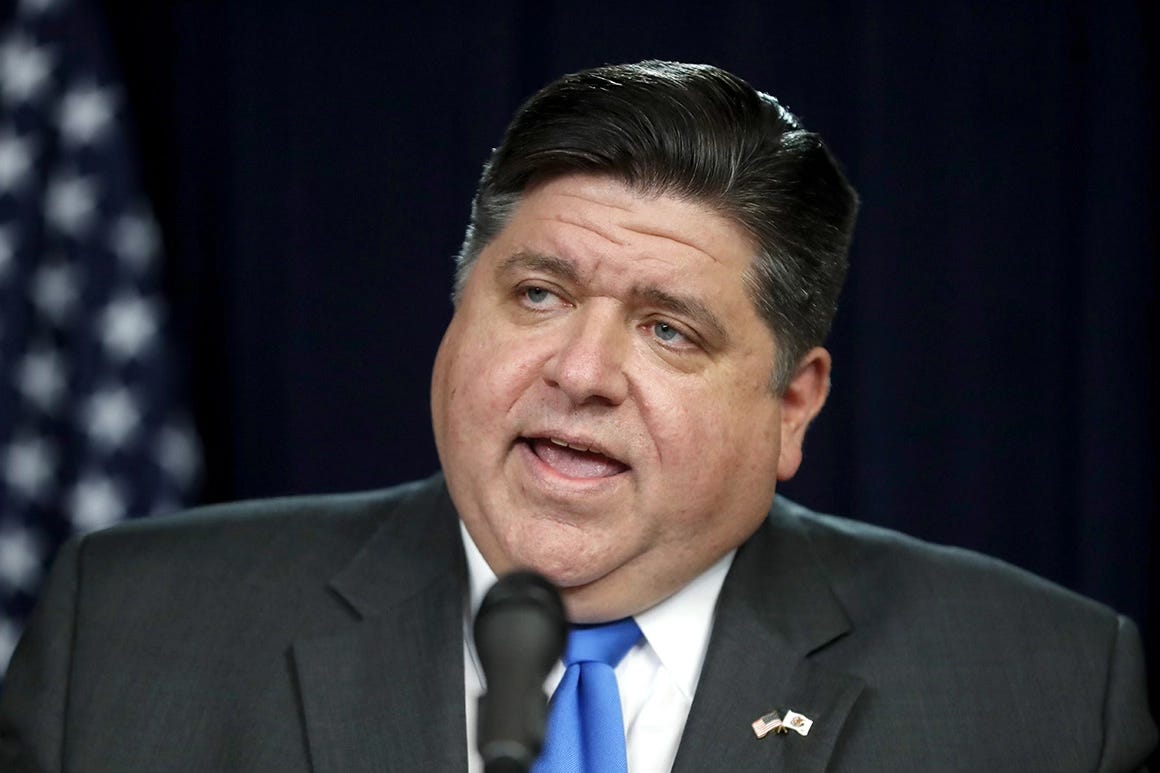
Illinois Governor JB Pritzker signed the state’s $56 billion budget into law Wednesday, including a controversial new crypto tax that has industry advocates comparing the measure to a “tollbooth on the internet.”
Pritzker’s signature clears the way for Illinois to impose a 20 basis point, or 0.2%, tax on certain digital asset business activities beginning January 1, 2027. The tax will apply to firms that exchange, transfer or store digital assets on behalf of customers rather than being tied to income, profits or capital gains. The measure is expected to generate roughly $60 million in annual revenue for the state.
According to people familiar with the legislation, the measure was added late in budget negotiations without input from industry stakeholders or any public economic study examining its potential impact.
Critics argue the measure singles out the crypto industry because there is no comparable state tax on the exchange, transfer or custody of stocks, bonds or derivatives anywhere in the country.
“Illinois has created a toll on a road it didn’t build and doesn’t maintain,” said Trish Turner, Tax Director at Crypto Tax Girl and a former IRS Digital Asset Senior Advisor “Stocks, bonds, and derivatives face nothing like it.”
Turner questioned how lawmakers arrived at the 0.2% rate, suggesting it was "reverse-engineered" to meet a predetermined revenue target. She also joined a growing chorus of crypto leaders warning the measure could trigger an exodus of crypto businesses from the Prairie State.
“Illinois just put a tollbooth on the internet,” she said. “The result could be developers relocating, exchanges routing around the state and the blockchain innovation ecosystem that Illinois could have cultivated growing elsewhere. You don’t build a digital economy by taxing the infrastructure layer.”


As for options to overturn the measure, the industry's path forward appears limited. Illinois lawmakers are out for the remainder of the year, leaving potential litigation and public pressure as the most likely avenues for challenging the tax before it takes effect.
Coinbase CEO Brian Armstrong has already begun rallying opposition to the measure. In a post on X, he called the tax "remarkably bad" and encouraged Coinbase's more than 1.5 million Illinois customers — whom he pointedly referred to as "voters" — to contact their representatives through Coinbase-backed advocacy group Stand With Crypto.
Crypto compliance isn’t slowing teams down anymore. It’s becoming a growth lever.
Sumsub is the identity verification and compliance platform trusted by 4,000+ companies, including 8 of the 10 largest crypto exchanges.
Their free State of the Crypto Industry 2026 report covers how the industry has shifted into a regulated maturity era: smarter fraud, higher expectations, and a new playbook for teams that want to scale. Inside: how to balance friction and conversion, where Travel Rule gaps remain, and why verification is now a competitive edge, not a checkbox.
Data from 4M+ fraud attempts and 300+ crypto companies surveyed. See how your peers are adapting here.
Rep. Dusty Johnson Warns Senate: Pass the Clarity Act Before August
This week on the podcast, Eleanor and Gerald sat down with Rep. Dusty Johnson (R-SD), chairman of the House Agriculture Committee’s Digital Assets Subcommittee, for a wide-ranging conversation on the Clarity Act, DeFi regulation, CFTC funding and why he believes the window for passing crypto market structure legislation is rapidly closing.
The South Dakota congressman also discusses the biggest hurdles standing between the bill and President Trump’s desk, why he sees parallels between crypto and the early days of the internet and what happens if the Senate sends the House a version of the legislation it can’t support.
Catch the full episode on all platforms here.
Midweek Recap

ICYMI: Here are some of the biggest stories making headlines this week.
The Federal Reserve left interest rates unchanged Wednesday, with Fed Chair Kevin Warsh declining to provide guidance on future rate hikes even as several Fed officials continue to project one additional increase this year.
The U.S. and Iran signed a peace deal to reopen the Strait of Hormuz, but crypto markets largely ignored the news amid a hawkish Fed.
Rep. Barry Moore (R-AL) won the Republican primary runoff for Alabama's open Senate seat, defeating former Navy SEAL Jared Hudson after receiving a significant boost from crypto-backed spending. Fairshake alone spent more than $12 million on the race.
CME CEO Terry Duffy, who will step down next year to become executive chairman, says the exchange plans to sue the CFTC over its decision to approve perpetual futures contracts.
Binance is reportedly preparing to halt services for customers across Europe after a key licensing application appears headed for rejection, according to Reuters. The exchange pushed back on the report, saying it remains committed to European users and is continuing to pursue authorization under MiCA.
A provision prohibiting the Federal Reserve from issuing a central bank digital currency until 2030 has been included in a bicameral housing package set for consideration this week.
Standard Chartered initiated coverage of Uniswap's UNI token with a $100 price target by 2030, implying roughly 40x upside from current levels as tokenized assets increasingly move onchain.
BlackRock launched BITA, a bitcoin income fund designed to give investors exposure to bitcoin while generating monthly yield through covered calls.
A bipartisan coalition of senators urged Treasury to maintain a pathway for state-regulated stablecoin issuers, arguing that states should continue to play a meaningful role in overseeing the growing sector.
Remember: New editions of the Crypto In America newsletter drop every Monday and Wednesday.
If you like what you’re reading, don’t forget to subscribe!
Thank you!
Keep up the great reporting!