
Welcome to the Wednesday edition of the Crypto In America newsletter!
What you’ll read: A key Republican on the Senate Banking Committee pushes to delay a Clarity Act markup to May, Fed nominee Kevin Warsh does an about face on CBDCs, a new bipartisan House bill would create a national payments framework for crypto and fintechs, and the new Binance.US CEO joins the podcast.
With Fed Chair nominee Kevin Warsh’s hearing in the rearview mirror, the Senate Banking Committee is set to turn its full attention to the Clarity Act. But it’s looking increasingly unlikely the committee would meet the timeline the crypto industry had been hoping for.
As Crypto In America reported Monday, the committee would need to notify members by this Friday to hold a markup next week. That has yet to happen, and signals from the lead negotiator on stablecoin yield suggest he is pushing Chairman Tim Scott (R-SC) for more time to socialize the deal with banking stakeholders.
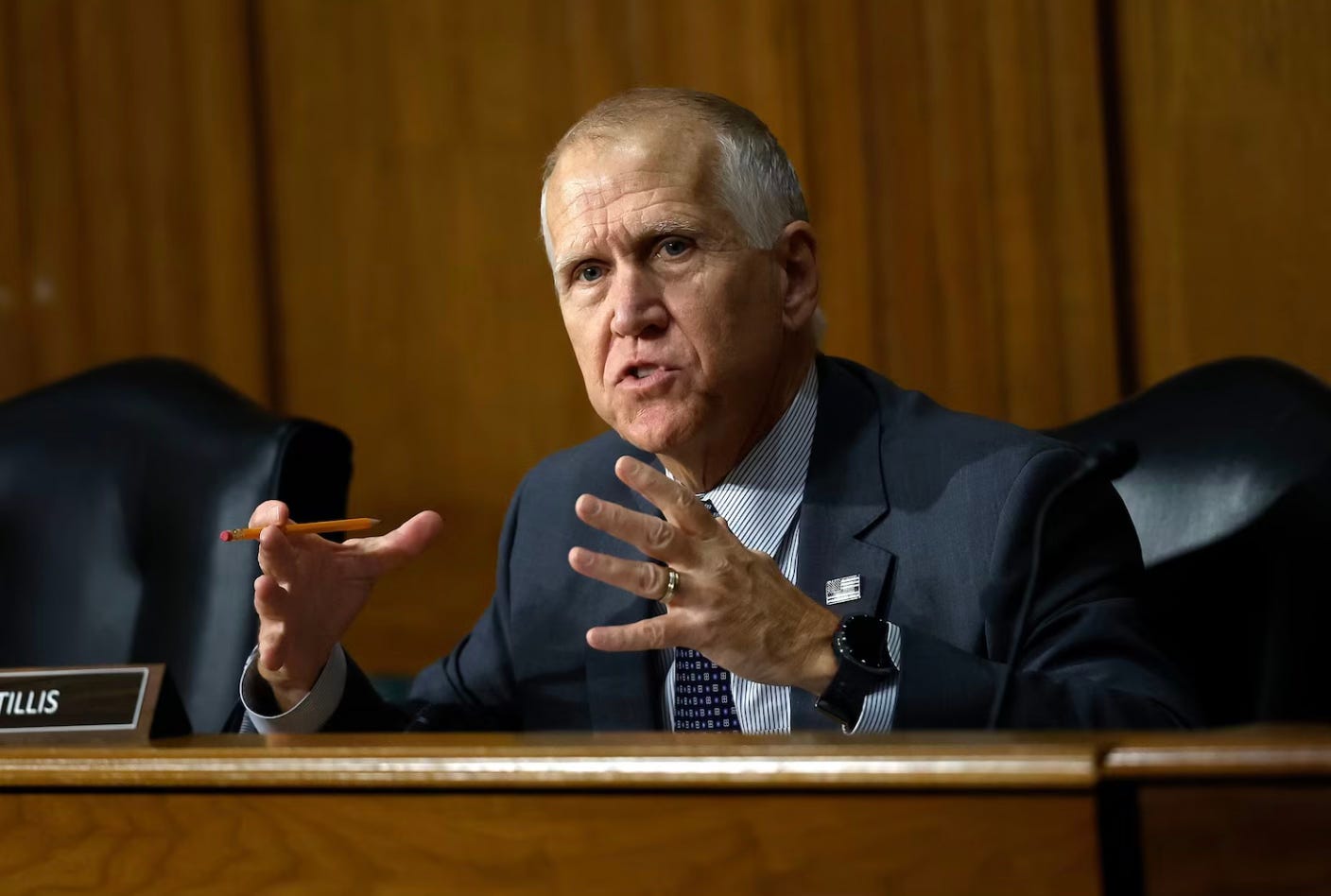
Sen. Thom Tillis (R-NC) told reporters on Tuesday that he does not expect a markup to happen in April, and that the committee should instead look to May. That would make the week of May 11 the first possible window, as the Senate is out on recess before then.
Tillis’ move comes as his office has become the target of a coordinated pressure campaign by bank lobbying groups, including the North Carolina Bankers Association. Banks have been unhappy with certain details of the stablecoin yield compromise that was reached between a select group of crypto firms and banks earlier this month, even though the text has not been publicly released, and many in the banking sector have yet to see it.
“It’s very important to me not to accelerate things, to hear everybody, and give them a rational basis for what we do accept,” Tillis told reporters.
Still, not all senators on the committee support pushing the markup beyond April.
“Further delay is unacceptable,” Sen. Cynthia Lummis (R-WY) said in a statement to Crypto In America. “I’m really proud of the bipartisan progress we’ve made, and I’m not going to let some of my colleagues sacrifice substantive and good progress in futile pursuit of a perfect bill that will never come. The offshore risk is real and our window is closing. It’s time to finally get this done.”
The crypto industry, which was originally told it would get a market structure markup last September, is also growing restless. On Monday, industry trade association The Digital Chamber sent a letter to the Banking Committee’s leadership urging them to move to a markup on digital asset market structure legislation as soon as possible. The letter noted it has been more than 270 days since the House passed the Clarity Act, and warned the legislative window is narrowing.
Other industry groups are expected to send more letters in the coming days, sources tell Crypto In America.
Warsh’s CBDC Pivot
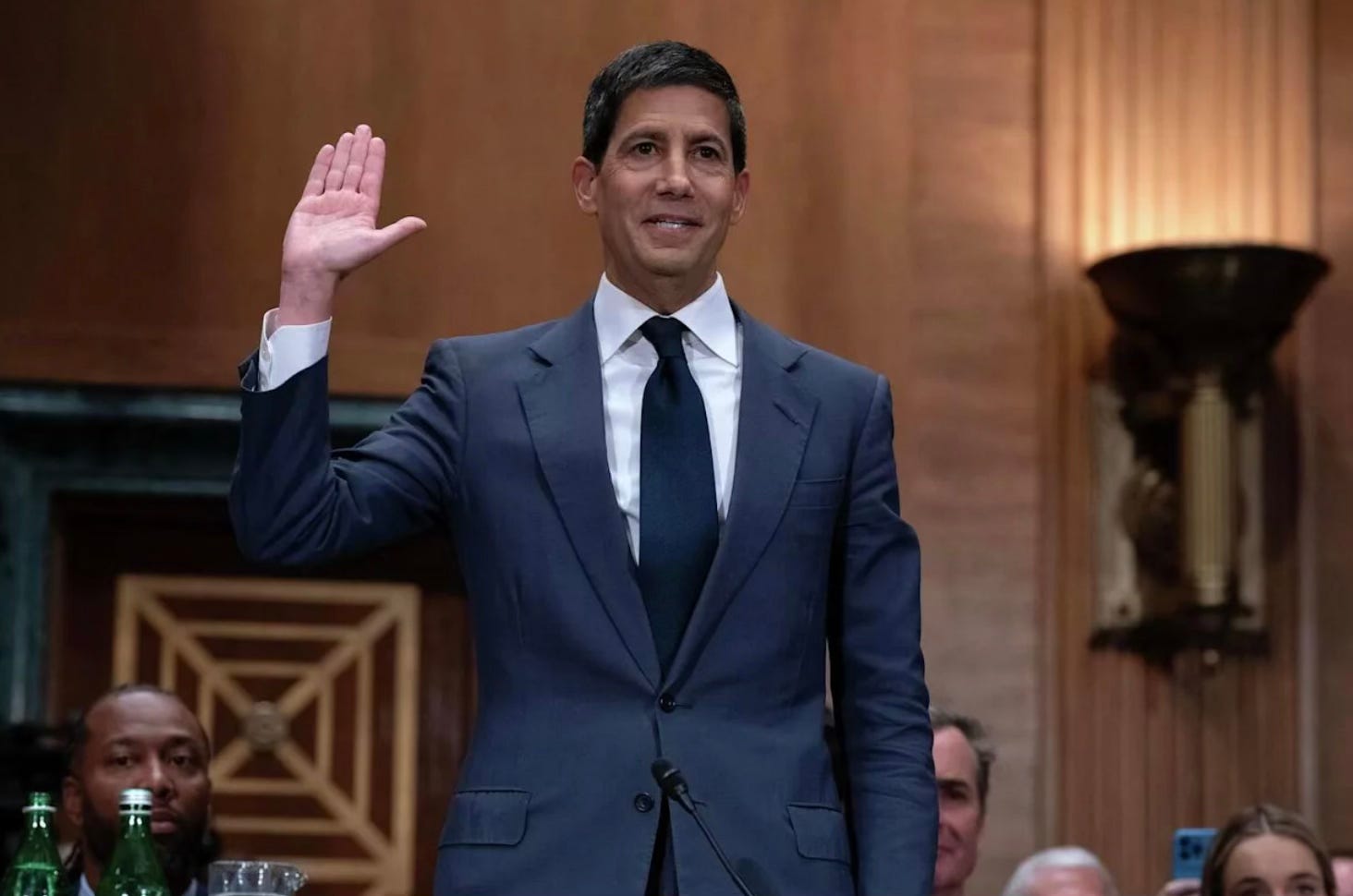
In 2022, Kevin Warsh wrote an op-ed for the Wall Street Journal arguing that the United States should create its own central bank digital currency to compete with China’s digital yuan.
Warsh had advocated for a wholesale CBDC that would be used by banks and institutions to modernize payments and enable faster settlements, rather than a retail CBDC for the public that could raise privacy concerns. But that rhetoric has nonetheless followed Warsh, and attracted criticism from privacy advocates and crypto supporters.
In his hearing before the Senate Banking Committee on Tuesday, Warsh appeared to denounce all notions of a CBDC. Responding to Sen. Bernie Moreno (R-OH), Warsh said he would not move the Federal Reserve to issue one if confirmed, as he believes the Fed does not have the authority to do so, and called it a “bad policy choice.”
He also told Sen. Cynthia Lummis (R-WY) that digital assets are already “part of the fabric” of the financial services industry in the United States.
Surprisingly, Warsh took few questions related to his extensive investments in blockchain and cryptocurrency companies, though Democrats did raise concerns about his financial disclosures and potential conflicts of interest tied to his broader investment portfolio.
If he gets appointed as the Fed’s chair, Warsh will be required to divest most of his holdings within 90 days.

Invest as you spend with the Gemini Credit Card®. Earn up to 4% crypto back on every purchase with no annual fee.
Gemini-branded credit products are issued by WebBank. This is not investment advice and trading crypto involves risk. See Rates & Fees.
Binance.US CEO Stephen Gregory on the Exchange’s Comeback Plan
This week on the Crypto In America podcast, Binance.US CEO Stephen Gregory joined us for his first exclusive interview since he took the job. Gregory outlined his vision for rebuilding the exchange after years of regulatory headwinds, and why he believes the U.S. is once again positioned to become a hub for crypto innovation and liquidity.
A compliance veteran with experience at Gemini and Currency.com, Gregory dug into what’s next for Binance.US, from the return of fiat rails and new product rollouts to a potential expansion into derivatives and prediction markets.
He broke down the evolving regulatory landscape, including the impact of the Clarity Act and the CFTC’s growing involvement, and explained why he sees this period as a potential “golden age” for building crypto companies in the U.S.
Watch this episode on all platforms here.
Lawmakers Unveil PACE Act to Expand Access to Fed Payment Rails
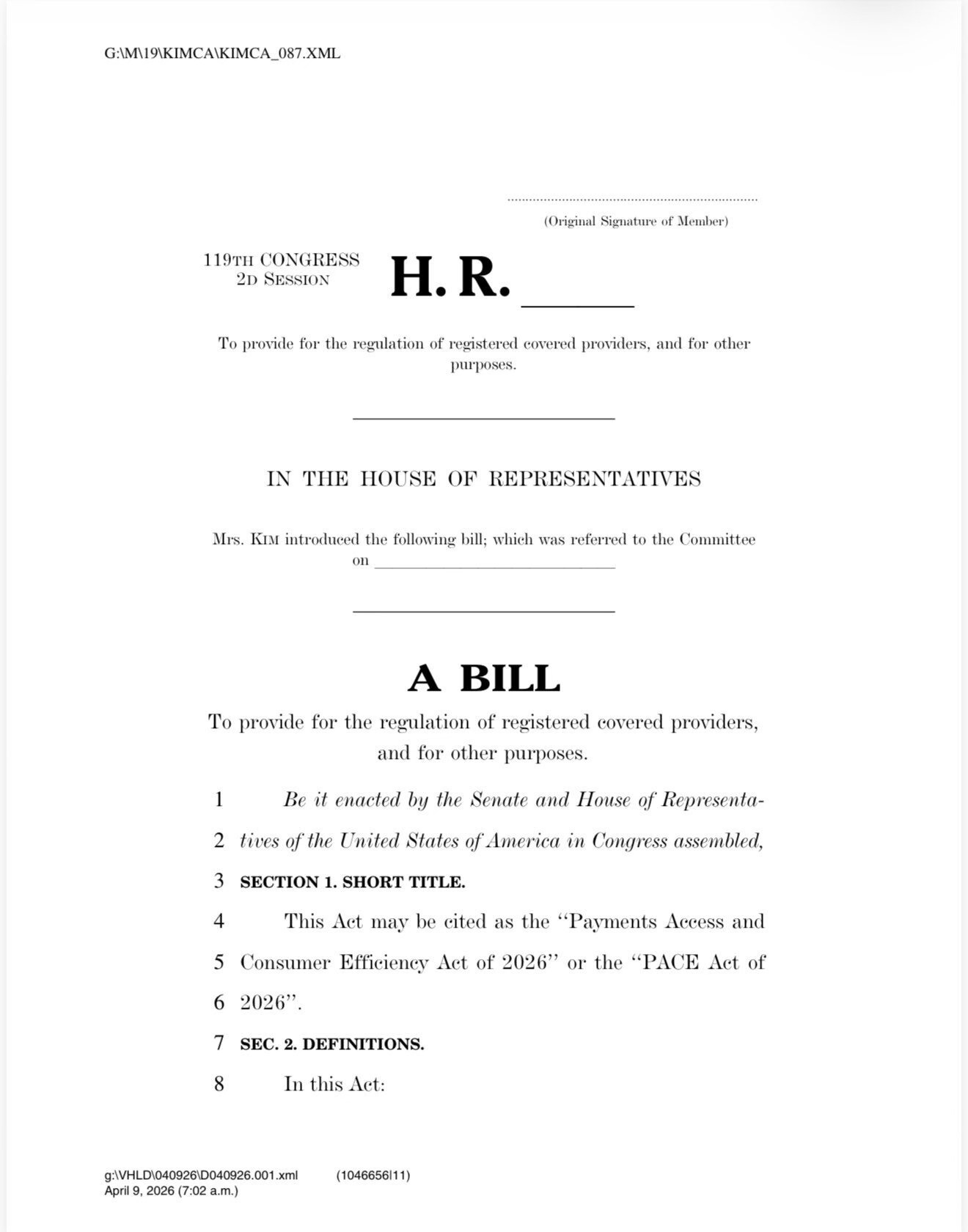
A new bipartisan bill introduced in the House aims to create a national payments framework for fintech and crypto companies.
Reps. Young Kim (R-CA) and Sam Liccardo (D-CA) on Tuesday unveiled the PACE Act, which would establish an optional federal regime that would let state-chartered depository institutions and credit unions access key Federal Reserve payment systems. The new regime would be overseen by the Office of the Comptroller of the Currency (OCC).
The approach aligns with Fed Governor Christopher Waller’s “skinny master accounts” concept, which Kraken Financial gained access to earlier this year. These accounts give more institutions direct access to payment rails without requiring them to obtain full bank charters. The PACE Act would also centralize approval authority over those accounts at the Federal Reserve Board rather than regional Reserve Banks.
The bill’s main goals are to lower costs and reduce friction in the payments system. Lawmakers say the current model forces consumers to pay higher fees passed on by banks, which rely on intermediaries to access rails like Automated Clearing House, the system that moves money between bank accounts.
“We can reduce the burden of bank fees borne by too many American families by enabling broader access to innovative payment systems that deliver cheaper, faster, more reliable service,” said Rep. Liccardo.
The bill has drawn support from several industry groups, including the Financial Technology Association, Blockchain Association, The Digital Chamber, and the Crypto Council for Innovation.
Midweek Recap

ICYMI: Here are some of the biggest stories making headlines this week.
President Trump said the U.S. will extend its ceasefire with Iran, lifting equities and crypto as Bitcoin holds above $78,000.
New York Attorney General Letitia James sued Coinbase and Gemini over their prediction market offerings, alleging the companies failed to obtain state gambling licenses and allowed underage customers to place bets on their platforms. Coinbase’s Chief Legal Officer Paul Grewal said the exchange would continue to fight for federal oversight. Gemini declined to comment.
TRON founder Justin Sun filed a lawsuit against the founders of Trump-backed World Liberty Financial in California federal court, claiming the project froze his tokens and stripped him of his shareholder voting rights.
A new documentary, Finding Satoshi, argues that cryptographers Hal Finney and Len Sassaman may have been Bitcoin’s elusive co-creators.
MoonPay, the Dogecoin Foundation, and House of Doge donated 1 million DOGE to the AKC Humane Fund to help dogs nationwide.
Michael Saylor’s Strategy has overtaken BlackRock’s IBIT ETF to become the largest Bitcoin holder with 815,061 BTC.
Coinbase released its first quantum risk report, saying crypto is safe today but urging the industry to prepare for future quantum threats, noting that proof-of-stake chains may be more vulnerable than others.
KelpDAO said the April 18 hack, now attributed to North Korea’s Lazarus Group, targeted LayerZero’s infrastructure rather than Kelp’s own systems.
Remember: New editions of the Crypto In America newsletter drop every Monday and Wednesday.
If you like what you’re reading, don’t forget to subscribe!
WTF!