
Welcome to the Wednesday edition of the Crypto In America newsletter!
What you’ll read: A nomination hearing for Fed Chair nominee Kevin Warsh will take priority over a Clarity Act markup next week; Kraken and Galaxy Digital face cybersecurity threats; Solana’s Lily Liu sits down with Crypto In America, and the headlines driving news this week.
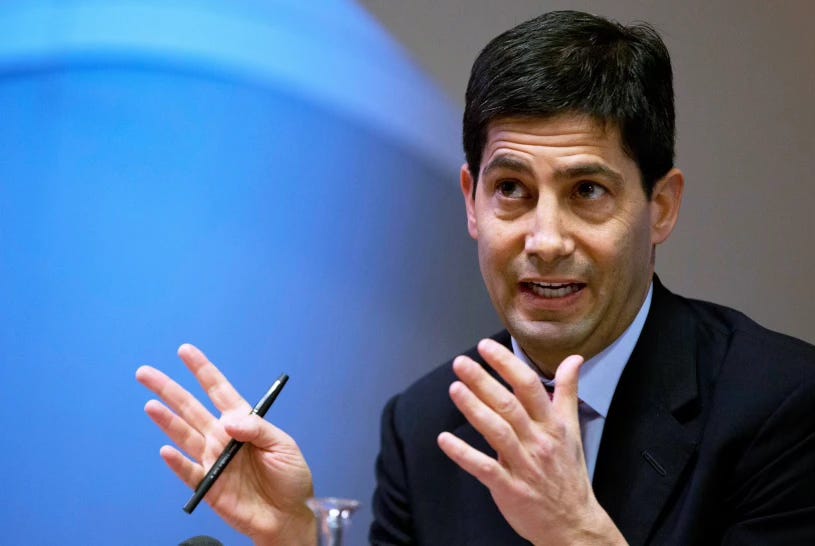
With Fed Chair hopeful Kevin Warsh’s nomination hearing set for Tuesday, a Senate Banking markup of the Clarity Act is likely to slip to the final week of April, or potentially into the second week of May (the Senate is out the first week), depending on how quickly remaining issues are resolved.
Banking Committee Chair Tim Scott (R-SC) released next week’s schedule, which did not mention a Clarity Act markup, sparking fears on social media that the bill could “die” if it doesn’t get voted on by the end of the month.
But Paradigm’s VP of Regulatory Affairs, Justin Slaughter, pushed back on that idea, saying the actual time crunch doesn’t begin until after Memorial Day. So, Senators still have roughly six to seven weeks to move the Clarity Act out of the Senate Banking committee and across the Senate floor.
Where things stand: Senate Banking Committee members and staff are adding finishing touches to the bill. Key areas still under discussion include ethics and tokenization, according to sources involved in the negotiations, suggesting that thornier issues like DeFi and stablecoin yield have largely been resolved.
Senator Thom Tillis (R-NC) told Politico on Monday he’s aiming to release text outlining the stablecoin yield compromise reached between banks and crypto firms this week, though Crypto In America has learned timing could shift depending on when the markup is scheduled.
Ethics could come into sharper focus following the recent public dispute between TRON founder Justin Sun and Trump-backed World Liberty Financial. Sun, an early investor in the WLFI platform, has accused the company of misleading investors. It isn’t yet clear whether Democratic senators pushing for stricter ethics provisions, including Adam Schiff (D-CA), will use the episode to bolster their case.
While some on social media lamented the delay of the Clarity Act markup, others welcomed indications that would-be Fed Chair Warsh may be more bullish on crypto than previously thought. According to his 69-page financial disclosure, Warsh holds over $100 million in assets, including early-stage investments in roughly a dozen crypto and blockchain companies through venture fund structures. That makes him likely one of the wealthiest Fed Chair nominees in history, and certainly among those with the closest ties to digital assets.
Some of Warsh’s investments include DeFi lending platform Compound, decentralized exchange dYdX, Solana, and Ethereum scaling networks like Optimism and Blast, alongside exposure to trading platforms and crypto infrastructure firms. Such links may make for a potentially complex recusal process for Warsh, who’s poised to take over what is shaping up to be a more crypto-friendly central bank.
Notably, the Fed granted Kraken Financial access to the coveted master account in January, making it the first crypto company to access the Fed’s payment rails.
Warsh’s crypto ties will almost certainly come up during his hearing next week, as senators probe potential financial conflicts of interest, and how he plans to unwind some of the more complicated LP stakes.
The Onchain IPO Era with Solana’s Lily Liu
This week on the podcast, we sat down with Lily Liu, president of the Solana Foundation, at the Solana Policy Institute’s Washington x Wall Street Summit to talk about where crypto fits into the future of global financial markets. Liu laid out her vision for blockchains like Solana serving as infrastructure for the underlying rails of capital markets.
We also dug into why she believes the world’s largest IPOs could move onchain by 2027; how “Netflix-style” distribution of assets could reshape access to investing; and why the next phase of the AI economy will require crypto-native payments. Liu also shared her outlook on U.S. regulation, and how it’s shaping where innovation happens next.
Watch this episode on all platforms here.
Invest as you spend with the Gemini Credit Card®. Earn up to 4% crypto back on every purchase with no annual fee.
Gemini-branded credit products are issued by WebBank. This is not investment advice and trading crypto involves risk. See Rates & Fees.
Kraken Faces Extortion as Cyber Threats Hit Crypto Firms
Crypto exchange Kraken says it’s being extorted by a criminal group that’s threatening to release videos allegedly showing access to Kraken’s internal systems containing client data.
Kraken’s chief security and information officer, Nick Percoco, attributed two incidents — one in February 2025 and another more recently — to inappropriate access by individuals within its support team. He wrote in a post on X that its systems were never breached and no funds were at risk.

“We will not pay these criminals; we will not ever negotiate with bad actors,” he said.
Roughly 2,000 accounts, or about 0.02% of Kraken’s user base, were potentially viewed, and its affected clients have already been notified, the exchange said.
Kraken says it is working with federal authorities, and that it has sufficient evidence to identify and arrest those responsible.
Galaxy Digital also disclosed a cybersecurity incident around the same time, saying hackers accessed an isolated research and development workspace, resulting in less than $10,000 in losses. The company claims there was no impact to client funds or core systems.
Both incidents come as Drift Protocol grapples with the aftermath of a $280 million dollar hack attributed to North Korean state-sponsored actors, underscoring that cyber threats remain one of crypto’s biggest vulnerabilities.
Midweek Recap

ICYMI: Here are some of the biggest stories making headlines this week.
SEC staff released guidance saying certain crypto interfaces, including DeFi front ends, wallet extensions, and apps, may operate without broker-dealer registrations if they meet certain conditions.
Ripple partnered with Kyobo Life Insurance to pilot Korea’s first tokenized government bond settlement on blockchain using Ripple Custody.
X rolled out Cashtags, allowing users to track stocks and crypto using live charts inside the app.
Goldman Sachs is entering the Bitcoin ETF race, filing with the SEC for a Bitcoin Premium Income ETF.
The U.S. Justice Department has opened a compensation process for victims of the $4B OneCoin crypto fraud, which ran from 2014 to 2017 and became one of the largest scams in crypto history.
Ondo Finance has sought a no action letter from the SEC, requesting clarity on the use of Ethereum for securities recordkeeping.
Remember: New editions of the Crypto In America newsletter drop every Monday and Wednesday.
If you like what you’re reading, don’t forget to subscribe!
Mark-up date “slips.” What a joke. Is that like Kanye “postponing” his scheduled June 11, 2026, concert in Marseille, France, until further notice? It's not postponed. It’s cancelled.
IMHO…
I don’t expect to see the Clarity Act or something like it anytime before 2032. At this point they can’t even get a mark-up, let alone pass something in both chambers.
There is nothing left of the Trump presidency this year when it comes to crypto, and after the midterms his complete admin will be a “lame duck,” completely impotent. There is a good chance now that Reps like Wisconsin’s Bryan Steil will lose in November.
Then in 2028 Dems take control of the executive branch for AT LEAST 4 years.
Sorry, the party is over. Blockchain is on its own.