

Inside the Last-Minute Deal That Saved the Clarity Act
Behind the scenes of the frantic negotiations that secured bipartisan support for a landmark cryptocurrency bill


The fate of the crypto industry’s most consequential piece of legislation hung in the balance Thursday morning as negotiations to secure Democratic support came down to the wire.
Ten minutes into the Senate Banking Committee’s highly anticipated markup of the Digital Asset Market Clarity Act, a small group of lawmakers quietly finalized a deal that ultimately propelled the legislation forward with bipartisan support, a breakthrough many believe significantly improves its prospects as it moves to the Senate floor.
The landmark bill, along with seven standalone amendments, advanced out of committee in a notable bipartisan 15-9 vote, with Senators Angela Alsobrooks (D-MD) and Ruben Gallego (D-AZ) joining all Republicans on the panel to send the legislation to the full Senate, a welcome surprise for many who had spent the previous 24 hours bracing for a strictly partisan markup that could have complicated the Clarity Act’s path forward.
“We went into the markup feeling somewhat defeated after learning Wednesday night that we were not going to get the bipartisan support we wanted,” said Cody Carbone, CEO of crypto trade association The Digital Chamber.
As Crypto In America reported, negotiations between committee Republicans and Democrats ended Wednesday night without a deal despite both sides having made what sources described as “significant progress” on establishing ethics guardrails for government officials, widely viewed as the primary obstacle to Democrats supporting the bill. However, talks stalled after discussions shifted to proposed changes to the Blockchain Regulatory Certainty Act, legislation designed to shield non-custodial software developers from prosecution under money transmitter laws, that Republicans were unwilling to accept.
The standoff continued into Thursday morning, including through a meeting of the committee’s five pro-crypto Democrats — Sens. Mark Warner (D-VA), Catherine Cortez Masto (D-NV) and Raphael Warnock (D-GA), Alsobrooks, and Gallego — in Warner’s office, where they discussed strategy before heading to the Dirksen Senate Office Building for the 10:30 a.m. hearing.
“Members were still hashing it out as late as 10:29 a.m.,” one Banking staffer told Crypto In America. “It was pretty unbelievable.”
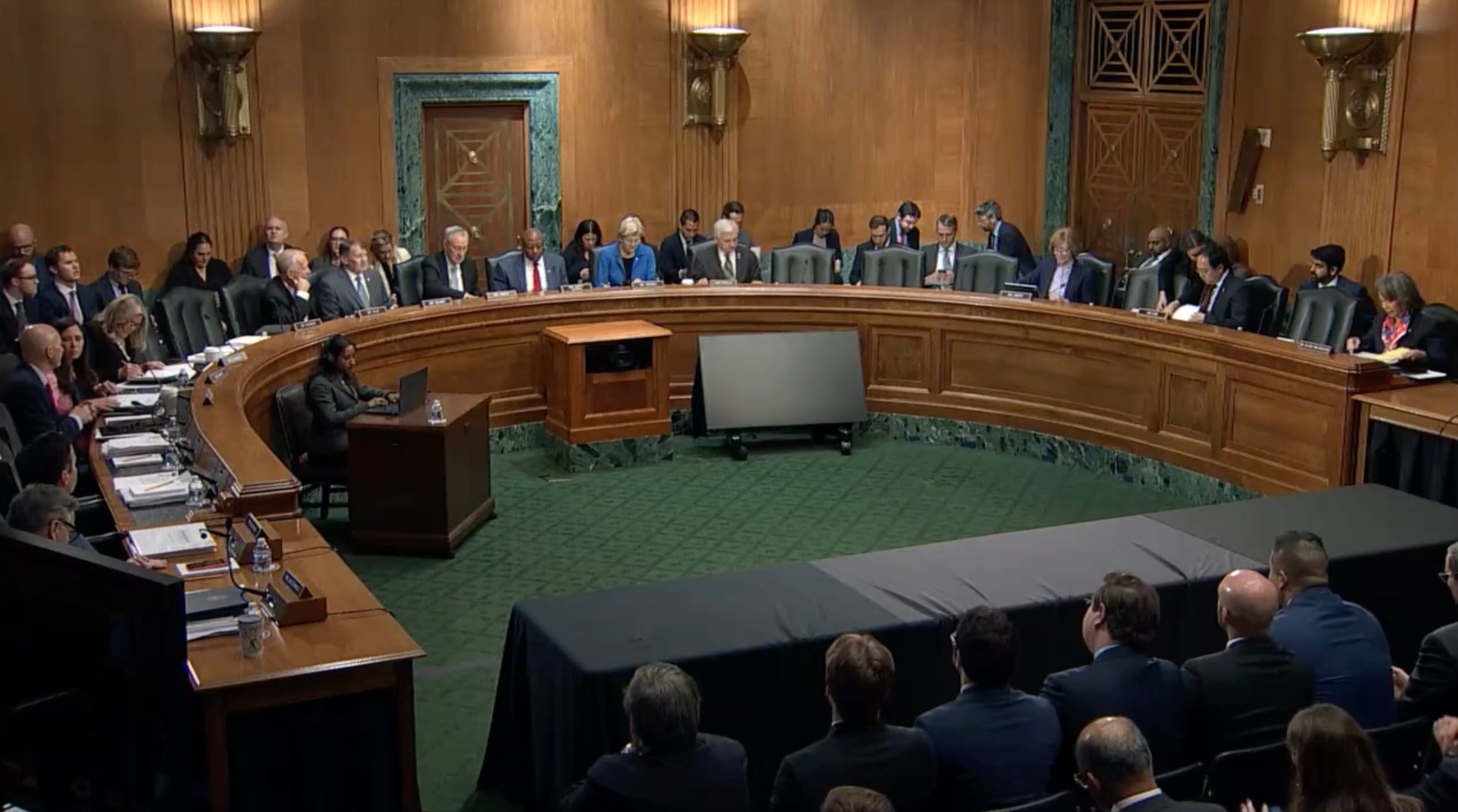
But it wasn’t until after Banking Committee Chairman Tim Scott (R-SC) called the hearing to order that the winds began to shift, largely unbeknownst to the packed hearing room of reporters, industry stakeholders and administration officials whose attention was focused on the amendment drama unfolding on the dais. Much of the debate centered on which proposals would ultimately be allowed to receive votes after Scott initially ruled more than a dozen amendments from both Democrats and Republicans “out of order” due to administrative and drafting errors.
Back in the chamber off the hearing room, known as the “ante room,” a small bipartisan group of lawmakers, including Sens. Thom Tillis (R-NC), Cynthia Lummis (R-WY), Alsobrooks and Gallego, hastily gathered to strike a last-minute deal aimed at salvaging Democratic support.
“It was right after Ranking Member Elizabeth Warren’s opening statement that we started getting more positive signals from committee staff, telling us there was now a potential path to a deal,” Carbone, whose team was communicating remotely with staffers during the hearing, told Crypto In America.
After the compromise was struck, another staffer described the scene unfolding in the ante room as “chaotic and unprecedented,” with GOP aides handwriting draft statements and amendment language to reflect the agreed-upon changes, scrambling to print updated materials and rush them out to members in real time.
“It was one of the more interesting days of my Senate career,” the staffer said.
Ultimately, the deal agreed to by the group included several strategic revisions to five proposed Lummis amendments, including one that removed language from Section 301 of the bill referencing the Blockchain Regulatory Certainty Act in Section 604. The move has since raised concerns among some DeFi advocates who say the change could strip out critical protections for software developers as the bill moves forward.
Other key revisions included edits authorizing banks and credit unions to engage in digital asset activities, a small tweak relating to tokenization, a ban on insider trading involving ancillary assets, and language preserving state consumer protection laws. All of the new amendments were added back into the voting lineup at Scott’s direction and ultimately passed with bipartisan support, helping secure key votes from Gallego and Alsobrooks, both of whom indicated their support remains contingent on further work being done to the bill.
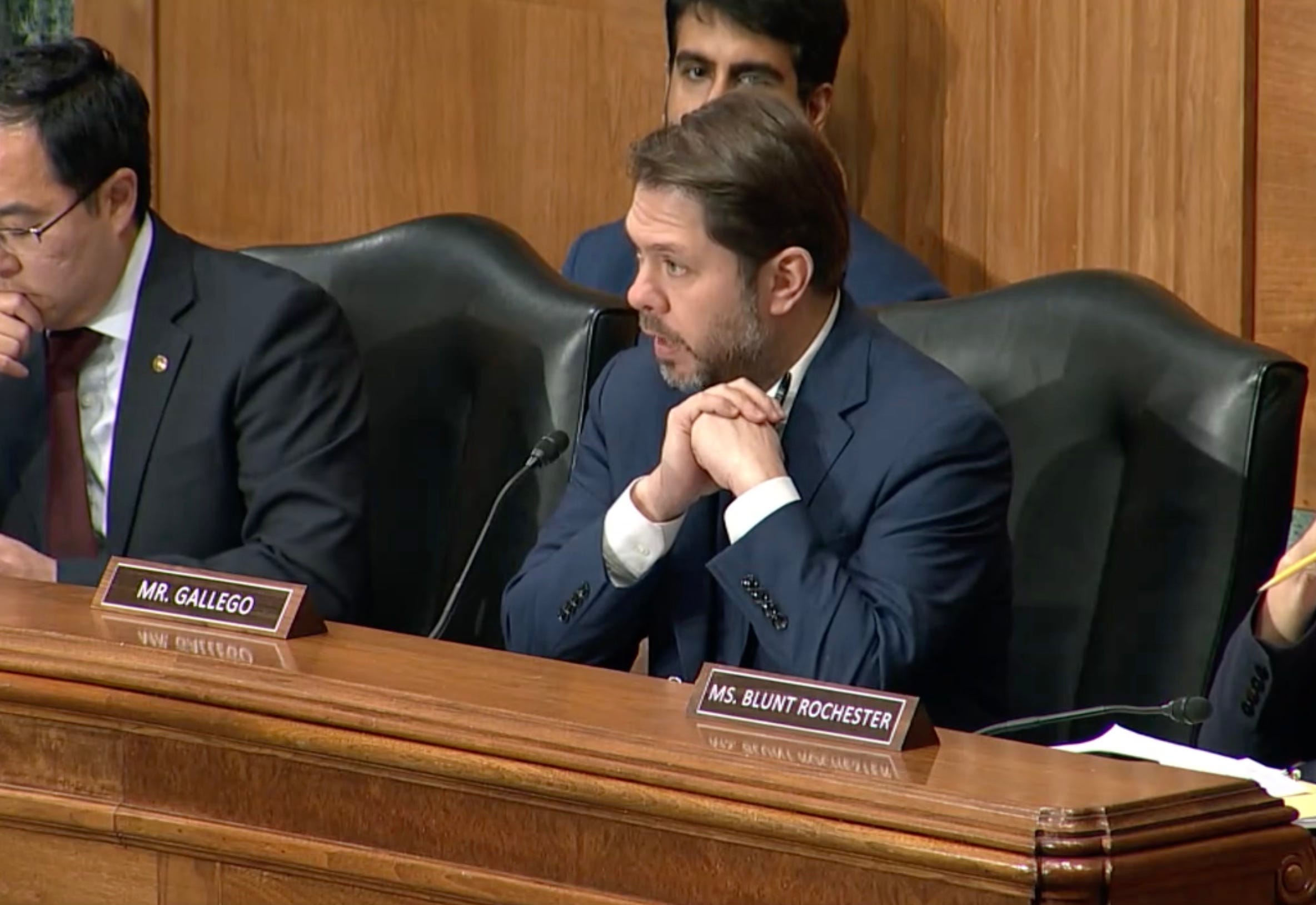
“I want to be clear: my vote here does not guarantee a vote on the floor,” Gallego said. “We have many outstanding issues still to resolve. Toughest and most critical of all is coming to an agreement on ethics guardrails for elected officials.”
Still, Gallego told reporters after the hearing that the ethics deal was at the “99-yard line,” signaling what could be a smoother path forward after weeks of rocky discussions over how to address President Trump’s crypto dealings.
Securing additional Democratic support from Warner, Cortez Masto and Warnock will likely depend on further negotiations aimed at addressing concerns from law enforcement groups, which argue portions of the bill could limit their ability to prosecute bad actors who exploit blockchain technology.
After surviving one of the more chaotic markups in recent Senate Banking Committee memory, the bill will now be merged with text from the Senate Agriculture Committee before heading to the Senate floor with fresh momentum and (lawmakers and their staff can only hope), fewer last-minute surprises.
Elite investigative journalism - thanks to all involved in bringing unique content to the market
Strong reporting by Eleanor Terrett and Crypto in America.
The most important takeaway is that this was not a clean victory. It was a negotiated survival event.
A 15-9 committee vote gives the CLARITY Act momentum, but the unresolved issues are the real story: ethics guardrails, AML concerns, law enforcement objections, and whether non-custodial software developers keep meaningful protection.
My view: crypto needs rules, but those rules cannot accidentally turn decentralization into a privilege only large firms can afford.
Clarity should reduce uncertainty.
It should not centralize the industry by compliance burden.